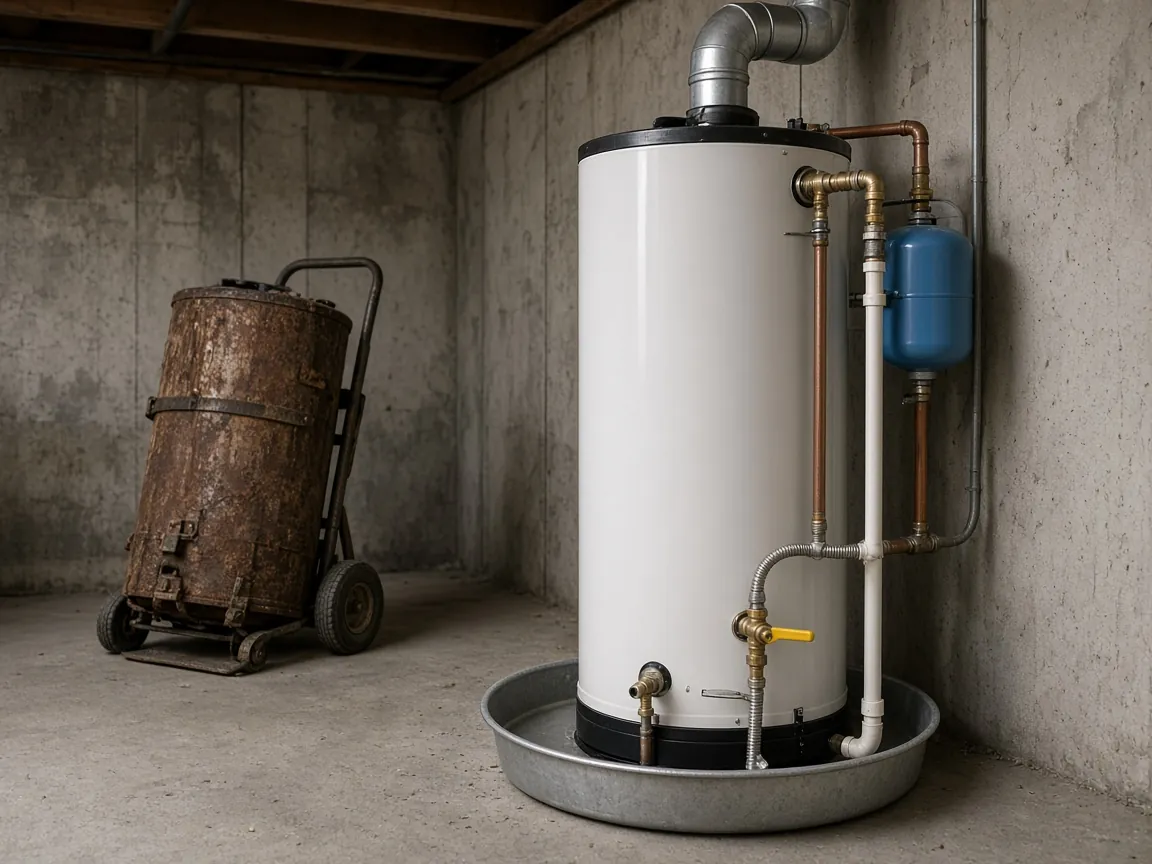
In Chicago, repairing a water heater or replacing it in-kind (same type, size, and shape) in a residential building up to four stories does not need a building permit, according to the Department of Buildings. Changing the type, size, or location, or altering the plumbing, is different and generally needs a permit. The work must still meet the Chicago Construction Codes either way. Suburbs such as Evanston, Oak Park, and Skokie set their own rules.
What the City actually says
The Chicago Department of Buildings publishes a list of plumbing work that does not require a building permit. That list of permit-exempt plumbing work includes repairing or replacing, in-kind, a hot water heater in a residential building up to four stories above grade, or in an accessory building such as a garage on the same lot. The City defines in-kind replacement as replacing existing materials or elements with new ones of the same type, size, and shape.
The same page is clear that skipping a permit does not waive code requirements. Venting, gas connections, relief valve discharge, and clearances must still comply.
When a permit is likely needed
Anything that is not a same-type, same-size, same-shape swap falls outside the exemption. Common examples:
- Switching from a tank to a tankless unit.
- Going from a forty-gallon to a seventy-five-gallon tank.
- Moving the heater to another room or another wall.
- Converting from gas to electric or heat pump.
- Changing an atmospheric heater to a power-vent model with a new wall penetration.
- Work in buildings over four stories, or in non-residential buildings.
For eligible repair and replacement work that does need a permit, Chicago offers the Express Permit Program for plumbing work. Its listed eligible work includes repairing or replacing an existing hot water heater. Altering, reconfiguring, or extending a plumbing system is not eligible through that path. Condo work requires an association approval letter as part of the application.
Water heater acting up? Talk it through by phone.
Call 000 000 0000Who does the work
The Express Permit page says applications generally require a licensed plumbing contractor, with limited owner-as-plumber cases that require additional forms and proof the owner lives at the property. When in doubt, ask the Department of Buildings before starting.
The suburbs are separate
Each suburb runs its own building department. Chicago's in-kind exemption does not carry over to Evanston, Skokie, Oak Park, Cicero, Berwyn, Oak Lawn, Park Ridge, or Des Plaines. Our city pages list the right office: for example, water heater replacement in Oak Park points to the Village of Oak Park, and water heater replacement in Evanston points to the City of Evanston. Illinois plumbing standards are set through the Illinois Department of Public Health plumbing program.
Why it matters for your sale or insurance
Buyers' inspectors in Chicago look closely at water heater venting, gas connectors, and relief valves. Work that clearly matches code, with permit records where a permit was required, avoids last-minute repair credits. Insurers may ask about the heater's age and installation after a leak.
A simple decision path
- Is it a repair, or a swap for the same type, size, and shape in the same spot, in a residential building of four stories or less in Chicago? It is likely permit-exempt, but must meet code.
- Is anything changing: type, size, location, venting, fuel? Plan for a permit.
- Is the home outside Chicago? Check with that suburb.
Keep your records
Whether or not a permit was required, keep the invoice, the model and serial number, and the install date with your house papers.
Related services and guides
Read about water heater replacement in Chicago and water heater installation in Chicago for what each job involves. If a type change is on the table, see tankless vs. tank in Chicago, and for condo buildings, read the condo water heater guide.