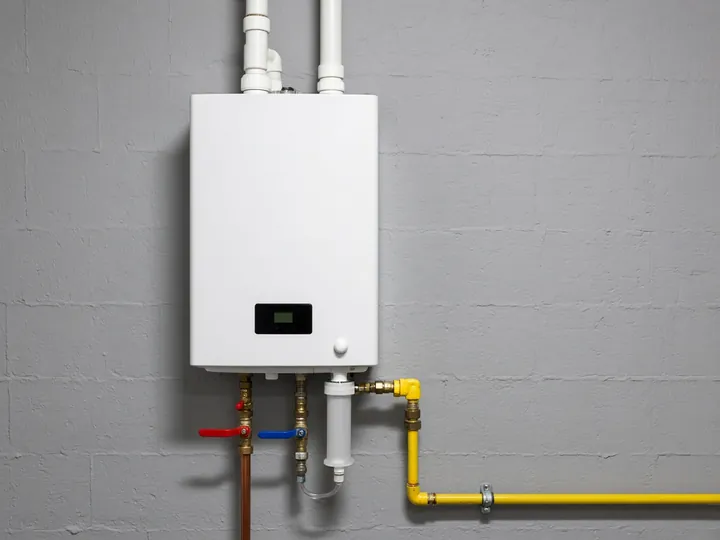
Tankless water heater repair in Chicago, IL usually starts with the error code on the display. The most common codes point to ignition failure, flame loss, blocked venting, low gas pressure, scale in the heat exchanger, or a flow problem. Many of these come from the installation or the environment, such as snow over a sidewall vent or a gas line too small for the unit, rather than from a failed part, so the fix is often outside the cabinet.
Read the code first
Every tankless unit stores and displays error codes, and the manual or the label inside the cover explains them. Write down the code, when it appears, and which fixture was running. A code that appears only when two showers run points to gas supply. A code that appears during a storm points to venting. A code after a cold night points to freezing. That context saves more time than any part.
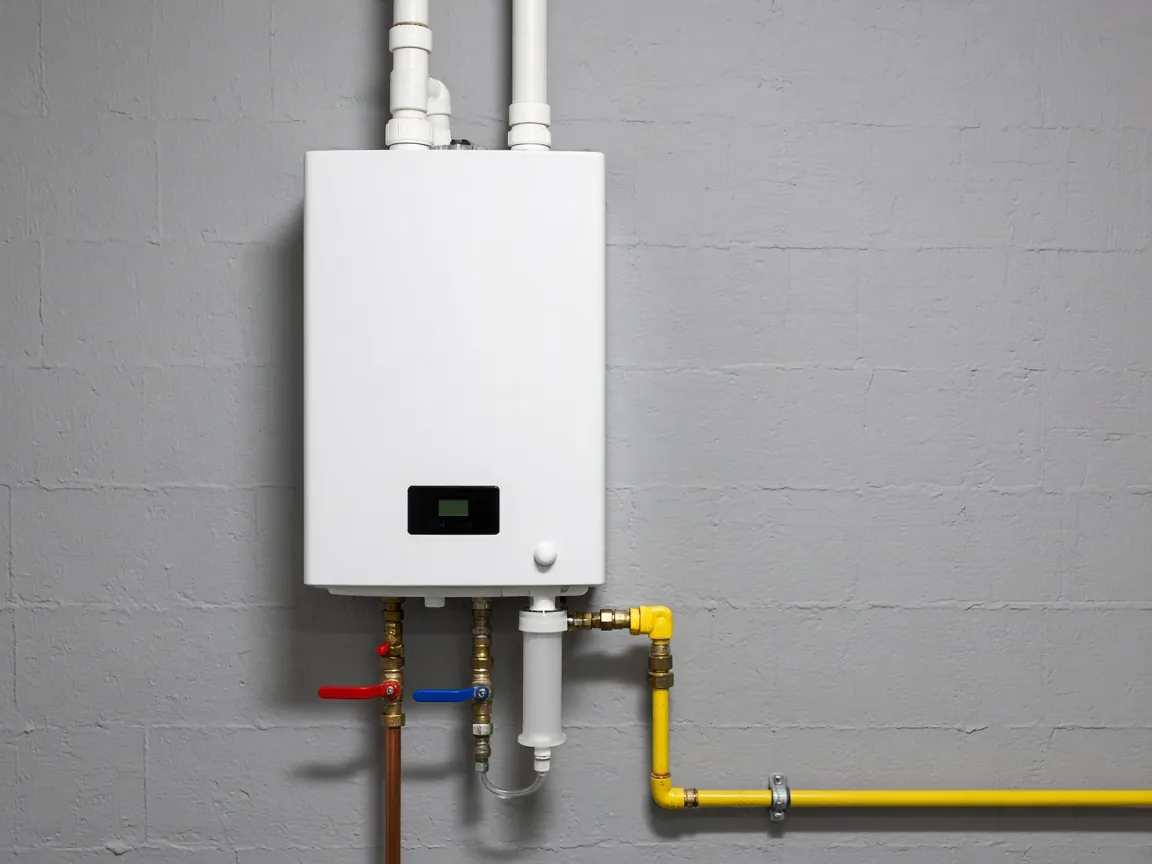
Ignition and flame failures
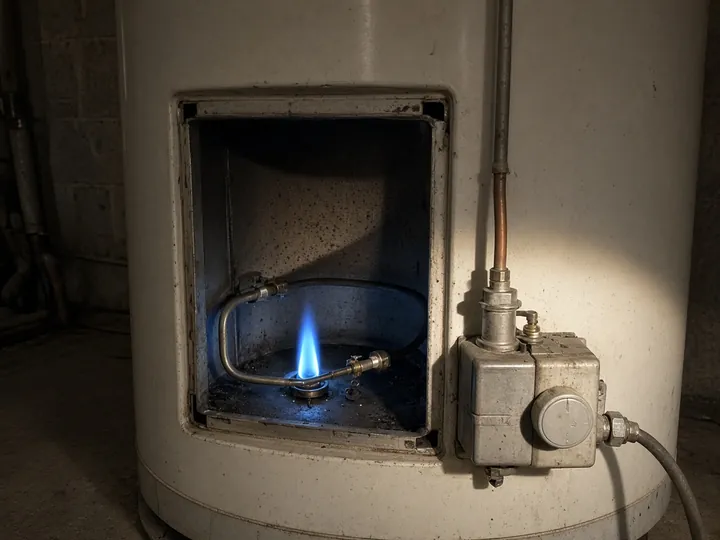
If the unit tries to light and gives up, the causes include low gas pressure, air in a newly serviced gas line, a dirty flame rod, a failed igniter, or a gas line that cannot keep up at full fire. Gas pressure should be measured at the unit at both low and high fire. In older Chicago homes, a tankless unit added to a gas line sized for a tank heater is a frequent cause of flame-loss codes when the furnace and the water heater fire together. Inside the city, meter and service questions go to Peoples Gas.
Water heater acting up? Talk it through by phone.
Call 000 000 0000Venting and snow
Sidewall terminations are the weak spot in a Chicago winter. Drifting snow, ice from a roof edge, or a nest in summer can block the intake or exhaust, and the unit shuts down to protect itself. Check outside before anything else, and clear the terminations gently. Persistent venting codes may mean the vent run is too long, has too many elbows, or lacks the right slope to drain condensate.
Scale and reduced flow
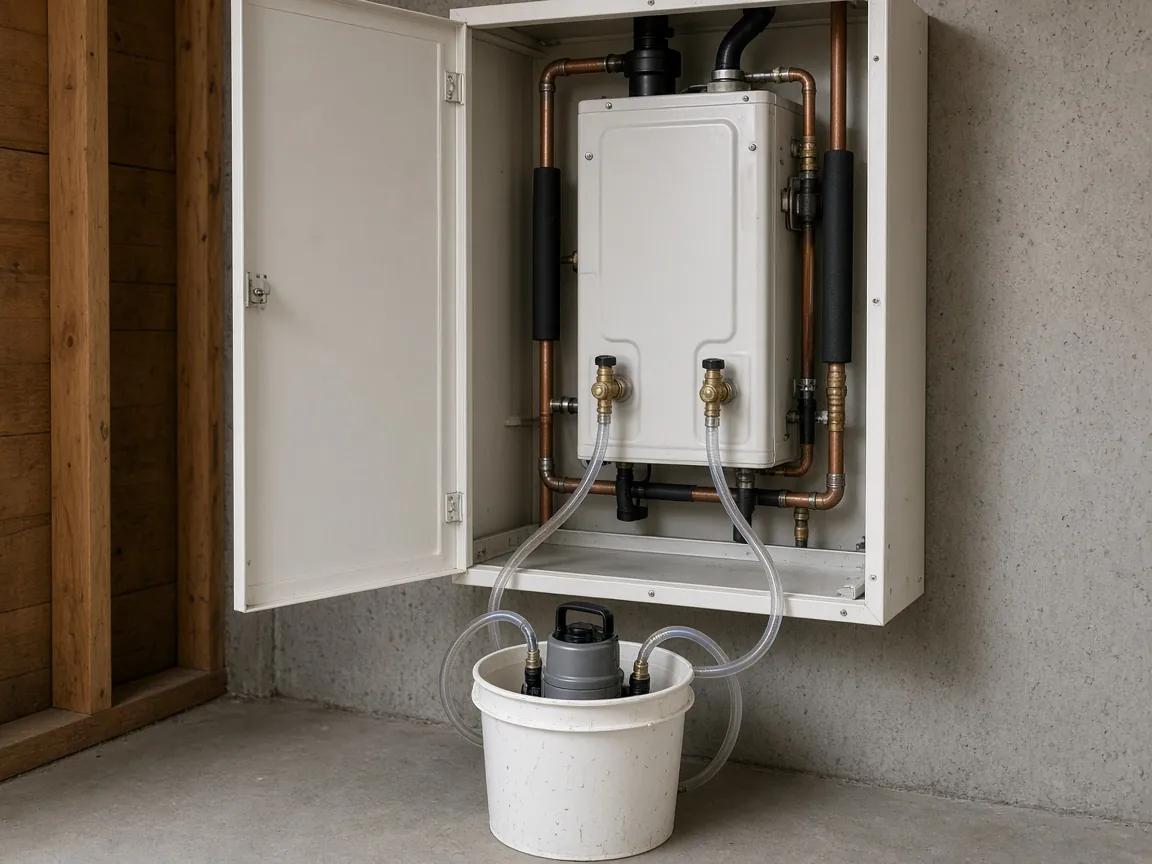
Lake Michigan water is moderately hard. Over time, scale coats the heat exchanger, which raises its temperature, reduces flow, and triggers scale or overheat codes. Descaling with a pump and a solution through the isolation service valves is routine maintenance. If the unit has no service valves, adding them is worth it. The inlet screen should be cleaned at the same time. Our tankless vs tank guide covers maintenance in context.
Freeze damage
A tankless unit on an exterior wall or in a cold space depends on electric freeze protection. During a power outage in a cold snap, or if someone unplugs the unit, the heat exchanger and water lines can freeze and crack. Signs include water dripping from inside the cabinet after a cold spell. The National Weather Service Chicago office posts extreme cold warnings, which are a good reminder to check that the unit has power.
Fixture and flow problems
Tankless units need a minimum flow to fire. Low-flow fixtures, clogged aerators, or a partially closed valve can keep a unit from igniting at a bathroom sink. Lukewarm water that turns cold, then hot, can be a cold-water sandwich, a normal trait of tankless systems, or a crossed connection elsewhere in the plumbing.
When to replace instead
A cracked heat exchanger outside warranty, repeated board failures, or a unit that was badly undersized from the start may be better replaced than repaired. Replacement is also the time to fix venting, gas supply, and service valves. See tankless water heater installation, or if you are switching back to a tank, water heater replacement.
In the neighborhoods
Renovated homes near Lincoln Park and townhomes a few blocks from the Lakefront Trail have many tankless units that are now ten or more years old. Many of those repair calls start with a scale code and end with the first descaling the unit has ever had.
What a tankless diagnosis in Chicago should cover
- Stored error codes pulled from the controller
- Gas pressure measured at the unit at low and high fire
- Minimum activation flow checked at the fixture that fails
- Inlet screen cleaned and service valves confirmed fully open
- Flame rod, igniter, and combustion fan inspected
- Vent and intake terminations checked for snow, ice, or nests
- Heat exchanger assessed for scale and freeze damage
- Sensors tested to spec before any board is replaced
Tankless repair call prep for Chicago
Before a tankless repair call in Chicago, write down the error code and when it shows, which fixture was running, and whether anything changed: a power outage, a cold snap, or a new gas appliance. Photograph the display, the bottom connections, and the vent terminations outside. Find the install date if the unit may still be under warranty.
Tankless water heater repair in nearby suburbs
Each suburb page covers local housing, water, and permit notes for this service.
- Tankless water heater repair in Evanston
- Tankless water heater repair in Skokie
- Tankless water heater repair in Oak Park
- Tankless water heater repair in Cicero
- Tankless water heater repair in Berwyn
- Tankless water heater repair in Oak Lawn
- Tankless water heater repair in Park Ridge
- Tankless water heater repair in Des Plaines
Chicago at a glance
- Coverage: Chicago, Illinois and nearby suburbs, shown on the map at city level, not a business address.
- Places named on this site include Millennium Park, Lincoln Park, and the Lakefront Trail.
- Permits: the Chicago Department of Buildings lists which plumbing work needs no permit.
- Utilities: Peoples Gas inside the city and ComEd for electricity.
Related pages
Suburb versions include tankless water heater repair in Park Ridge and tankless water heater repair in Skokie. Tank heaters are covered on gas water heater repair.