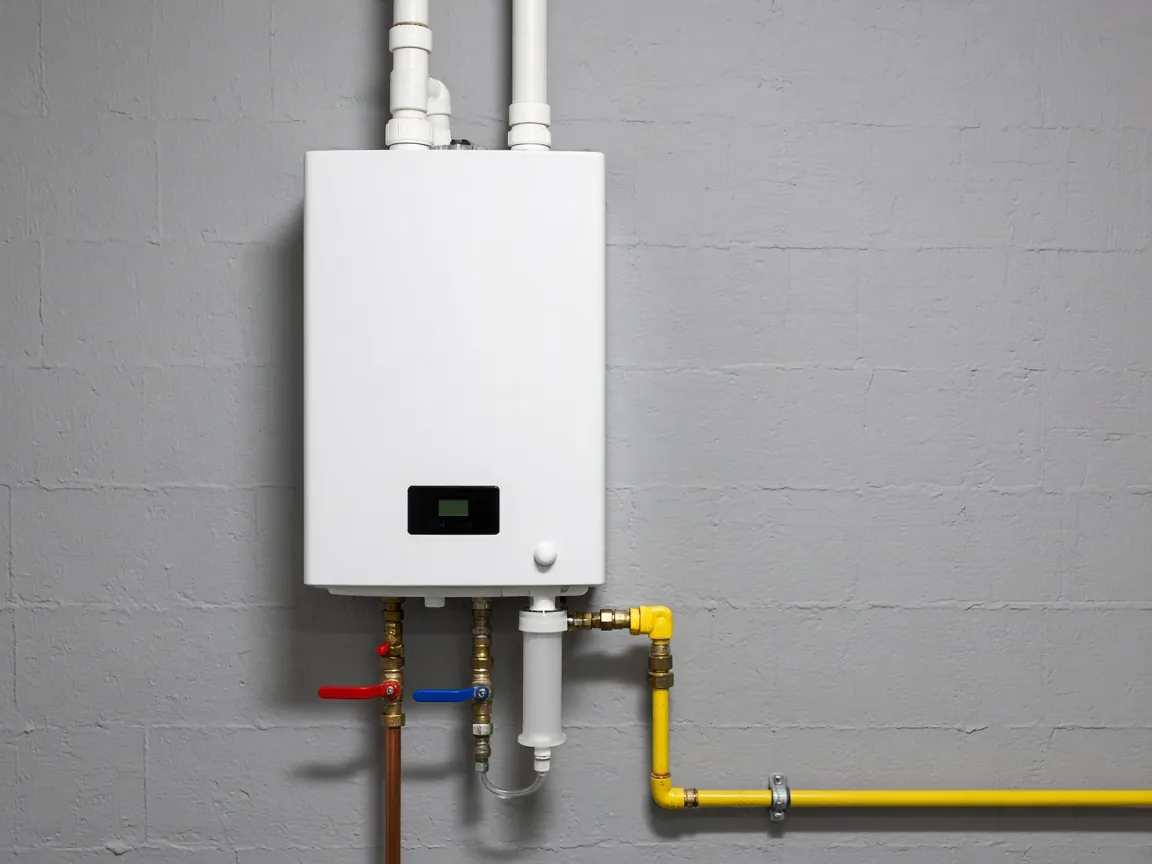
Tankless water heater installation in Chicago, IL works well when the unit is sized for winter, not summer. Lake Michigan water reaching your home in January can be close to freezing, so a tankless unit has to raise it by roughly eighty degrees, which cuts its flow rate sharply. A Chicago install also has to account for a gas line large enough for the unit's high burner input, sidewall venting that stays clear of snow, and a condensate drain for condensing models.
Why winter decides the size
A tankless heater is rated by how many gallons per minute it can deliver at a given temperature rise. In summer, when incoming water is relatively warm, almost any unit looks generous. In a Chicago February, the same unit may manage only two showers at once, or one shower and a dishwasher. The right way to size is to count the fixtures that run together on the busiest winter morning, add their flow rates, and compare that with the unit's capacity at a winter temperature rise. Our winter hot water guide explains the numbers.
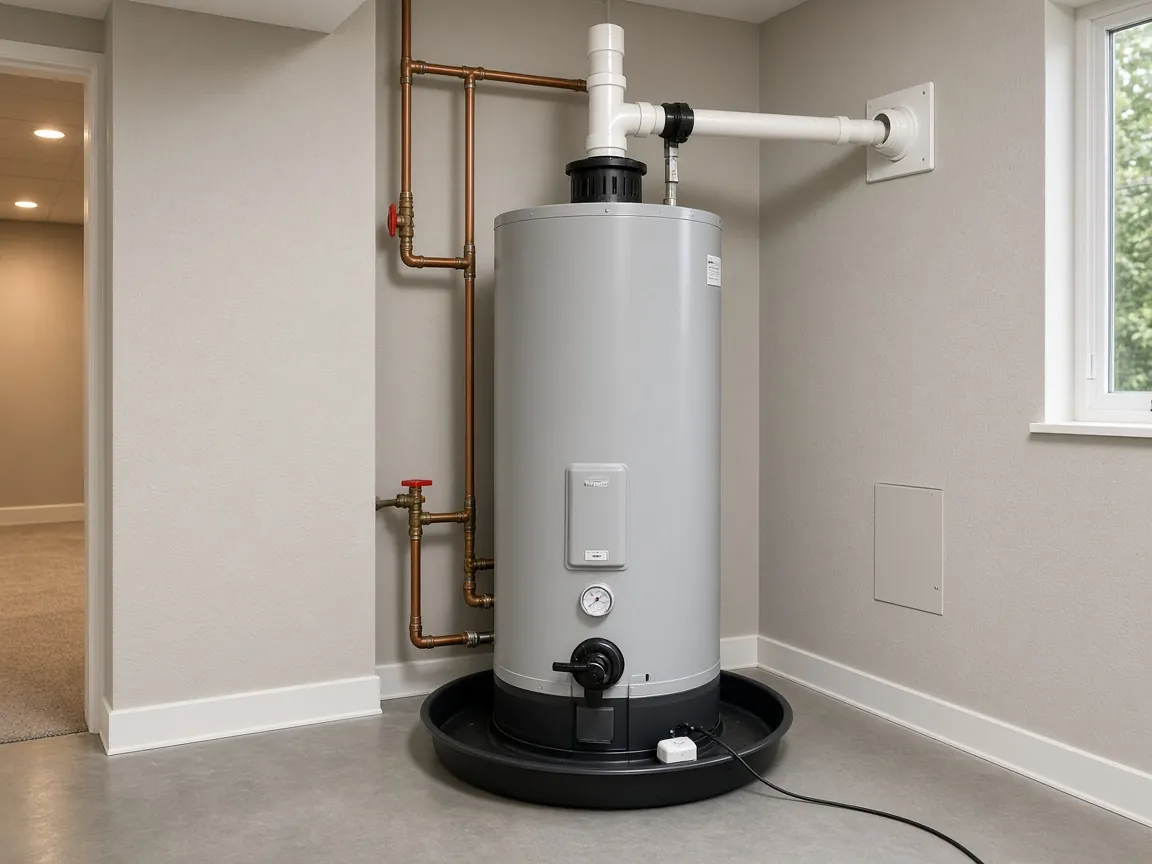
The gas line is usually the hard part
Tankless units burn a lot of gas while they run, often several times the input of a typical tank heater. Many Chicago homes were piped decades ago for a furnace, a range, and a small water heater. The existing pipe from the meter may be too small or too long to feed a tankless unit plus everything else. Pipe sizing depends on total load and run length, and upsizing may mean new pipe from the meter. Inside city limits, the meter and service belong to Peoples Gas; in many suburbs, Nicor Gas. If the meter itself is undersized, the utility is involved.
Water heater acting up? Talk it through by phone.
Call 000 000 0000Venting through Chicago walls
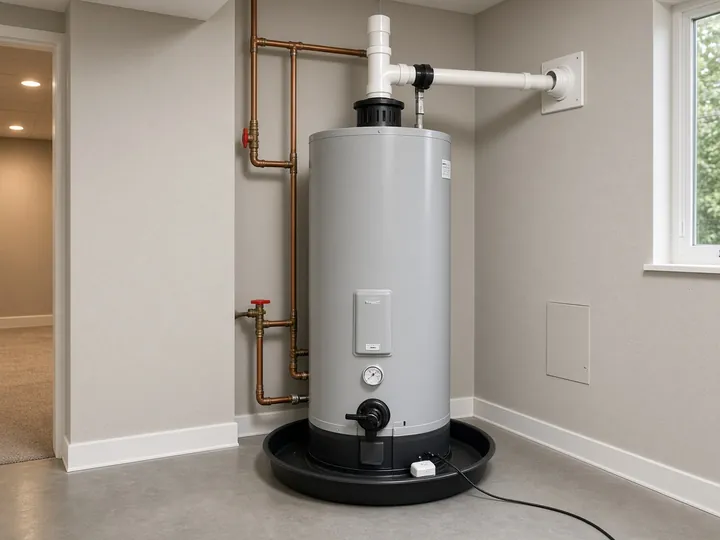
Most tankless installs vent through a side wall with plastic or stainless pipe. The terminations need clearances from windows, doors, gas meters, and the ground, and in Chicago they also need to stay above typical snow depth and away from spots where drifts pile up. A blocked intake or exhaust is one of the most common tankless shutdowns during a snowstorm. In dense neighborhoods with gangways a few feet wide, finding a legal termination can take some planning. Some units can vent through an existing chimney with an approved liner kit.
Condensate and freeze protection
Condensing tankless units produce acidic condensate that must drain to a floor drain or a pump, usually through a neutralizer. The drain line must not freeze. Units on exterior walls or in unheated spaces rely on built-in freeze protection that needs electricity, so a power outage in a cold snap is a real risk. Plan where the unit goes with that in mind.
Water quality and service valves
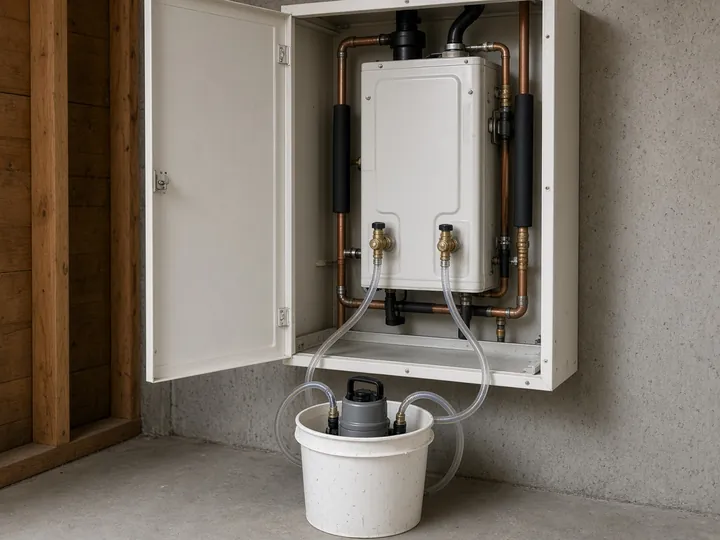
Lake Michigan water is moderately hard, and scale builds up in tankless heat exchangers over time. Every install should include isolation service valves so the unit can be descaled with a pump and solution without cutting pipes. An accessible inlet screen helps too. Ask about the descaling interval the manufacturer recommends for your water.
Permits and condo rules
Switching from a tank to a tankless unit changes the heater's type, so in Chicago it is not an in-kind replacement and goes through the Express Permit Program for plumbing work or the appropriate permit. Condo associations may restrict sidewall vents on the facade. In historic districts in some suburbs, exterior changes can need review. Check before buying.
Is tankless right for your home?
Tankless is a strong choice for homes with a gas line that can be upsized, a good wall for venting, and a household that wants endless hot water for long showers. It is a weaker choice where the gas line would be costly to replace, where there is no practical vent location, or in a condo with electric-only service. Our tankless vs tank comparison goes through the trade-offs. For a modern tank in a tight basement, see water heater installation.
Around the city
Owners of renovated two-flats near Humboldt Park and of single-family homes near the Garfield Park Conservatory often ask about tankless when a basement is being finished, because a wall-hung unit frees floor space. That is a good reason, as long as winter sizing and venting come first.
What a first tankless install in Chicago should cover
- Total gas load and pipe run from the meter calculated
- Unit sized for winter inlet water near the freezing point, not summer water
- Vent and intake material and terminations chosen per the manual and code clearances
- Condensate drain and neutralizer planned for condensing units
- Isolation service valves and an accessible inlet screen installed
- Dedicated outlet or circuit for controls, fan, and freeze protection
- Permit and inspection requirements confirmed before work starts
Tankless quote prep for Chicago
Before asking for a first tankless quote in Chicago, list every gas appliance in the home, measure from the gas meter to the planned location, and photograph the wall where the unit would hang and the outside wall where vents would exit. Count the fixtures that run at the same time on a winter morning.
Tankless water heater installation in nearby suburbs
Each suburb page covers local housing, water, and permit notes for this service.
- Tankless water heater installation in Evanston
- Tankless water heater installation in Skokie
- Tankless water heater installation in Oak Park
- Tankless water heater installation in Cicero
- Tankless water heater installation in Berwyn
- Tankless water heater installation in Oak Lawn
- Tankless water heater installation in Park Ridge
- Tankless water heater installation in Des Plaines
Chicago at a glance
- Coverage: Chicago, Illinois and nearby suburbs, shown on the map at city level, not a business address.
- Places named on this site include Millennium Park, Lincoln Park, and the Lakefront Trail.
- Permits: the Chicago Department of Buildings lists which plumbing work needs no permit.
- Utilities: Peoples Gas inside the city and ComEd for electricity.
Related pages
If an existing unit is acting up, see tankless water heater repair. Suburb versions include tankless water heater installation in Oak Park and tankless water heater installation in Des Plaines.