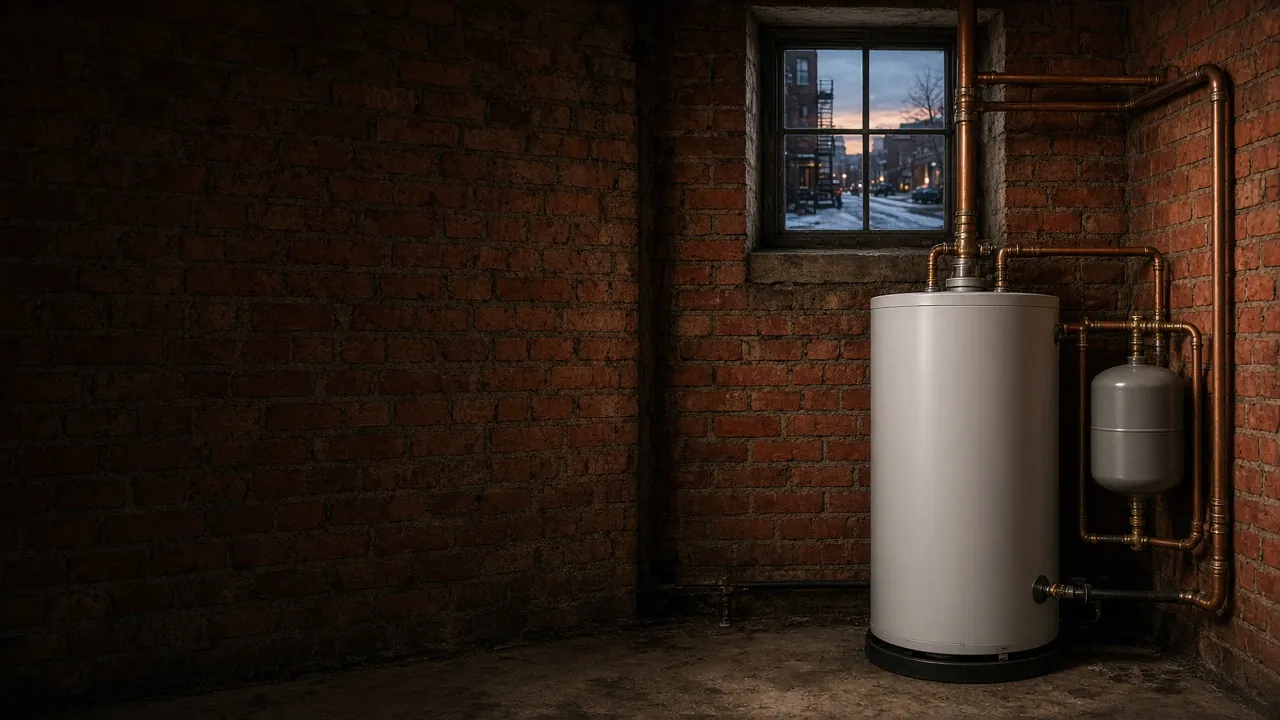
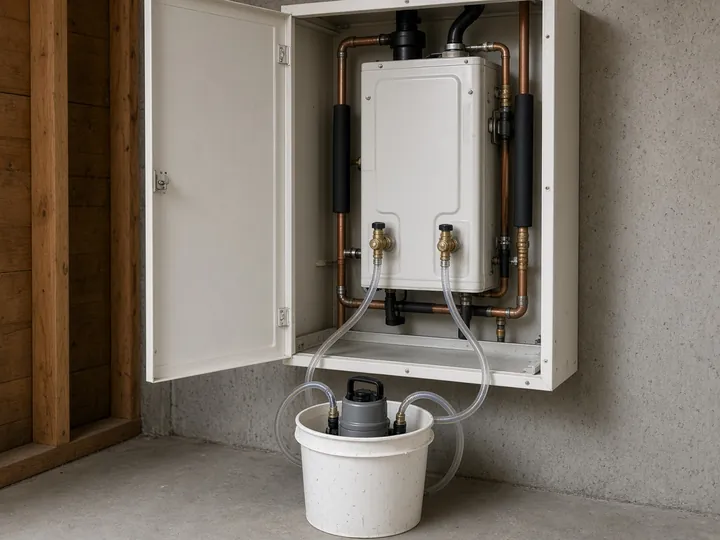
Water heater repair in Chicago, IL usually comes down to one of three things: a gas tank that will not stay lit, an electric tank with a failed element or thermostat, or a tank that has started to leak and needs replacing. Most Chicago heaters live in basements and vent into old masonry chimneys, and Lake Michigan water arrives close to freezing in winter, so the right fix depends on the building as much as the heater. This page explains the common problems, what repair and replacement involve, and what the city's permit rules say.
Why Chicago water heaters wear the way they do
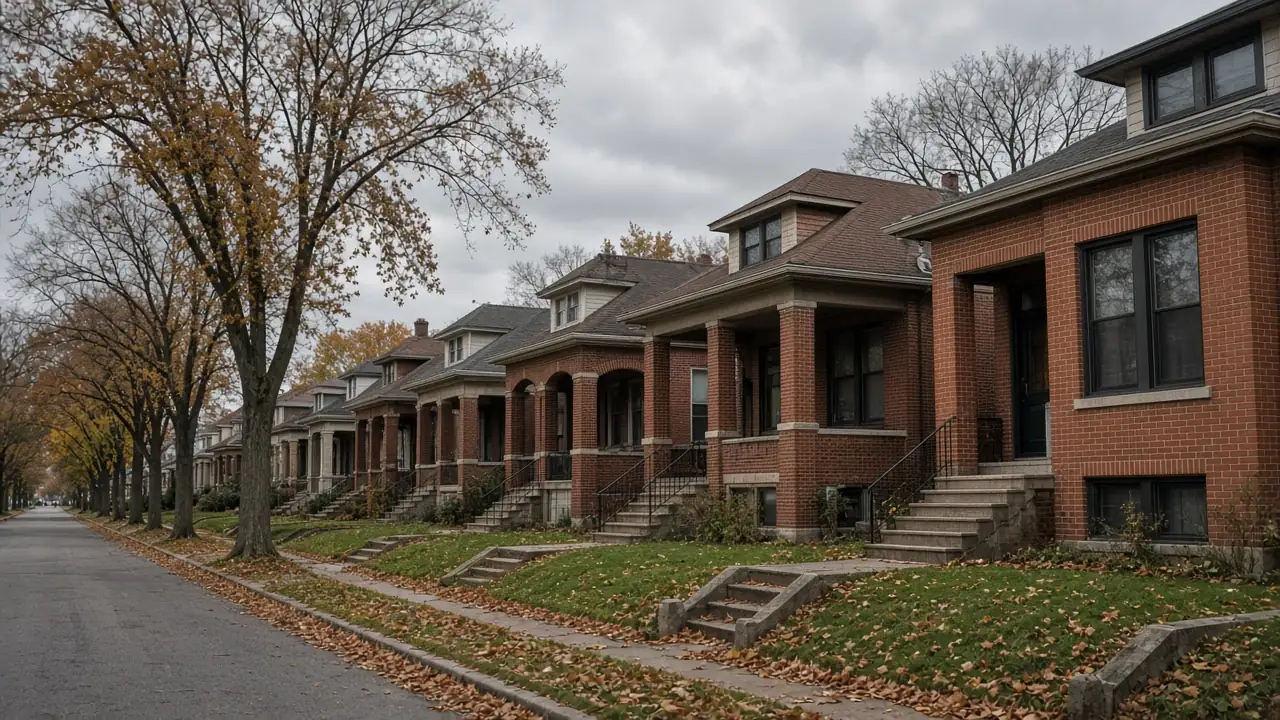
Chicago's housing is old and dense. The Bungalow Belt that wraps the city from Rogers Park and Portage Park around to Chatham and Beverly is full of brick bungalows built between about 1910 and 1940. Two-flats, greystones, and three-flats line the streets of Logan Square, Pilsen, Bridgeport, and Avondale. Each building type puts the water heater somewhere different and asks it to do something different.
In a bungalow or two-flat, the heater sits in the basement next to a furnace or boiler and sends its exhaust into a masonry chimney through a short metal connector. That chimney may be ninety years old. When the furnace is replaced with a high-efficiency model that vents out the side wall, the water heater is left alone in a big, cold flue, and draft problems follow. In a condo tower, the heater is electric, sized to fit a closet, and surrounded by finished floors and neighbors below.
Winter is the other big factor. Chicago's water comes from Lake Michigan, and by January the water reaching your heater is near freezing. A tank has to raise that water roughly eighty degrees instead of the fifty or sixty it handles in summer, so hot water runs out faster and burners and elements work longer. Lake water is moderately hard, which leaves a layer of sediment in tanks and scale in tankless heat exchangers over time.
The problems we hear about most
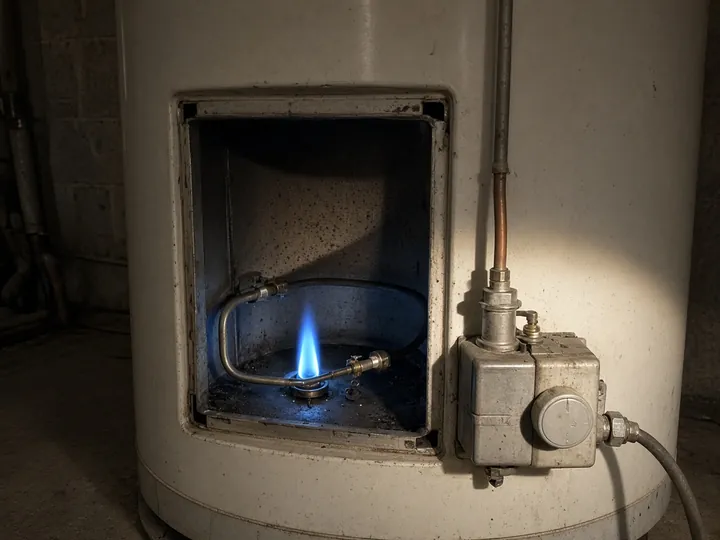
No hot water on a gas tank. The pilot is out or the burner will not light. On older tanks, a worn thermocouple is the usual cause. On newer ones, a flame sensor, igniter, or the flammable vapor sensor may be at fault. Our gas water heater repair page walks through the checks.
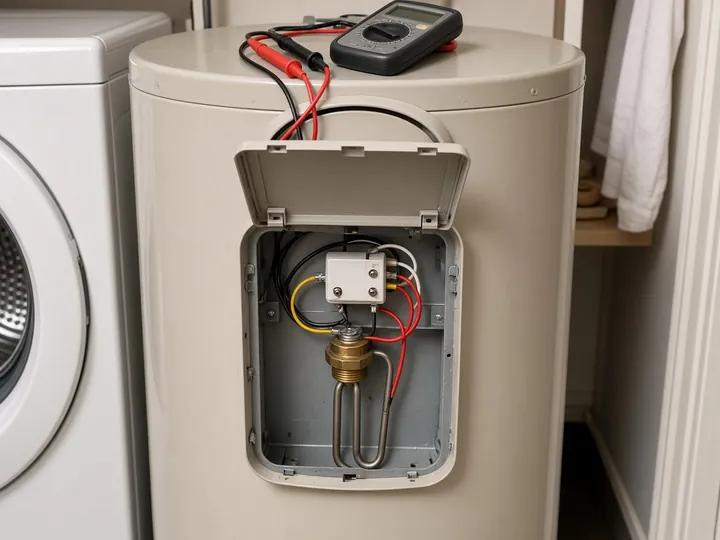
Lukewarm or short hot water on an electric tank. One of the two elements, or a thermostat, has failed. Condo owners near Millennium Park and along the lakefront see this most because high-rises rely on electric heaters. See electric water heater repair.
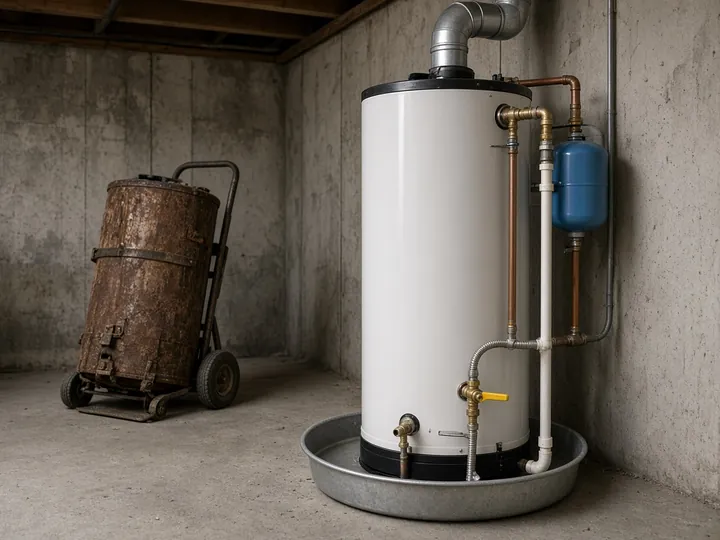
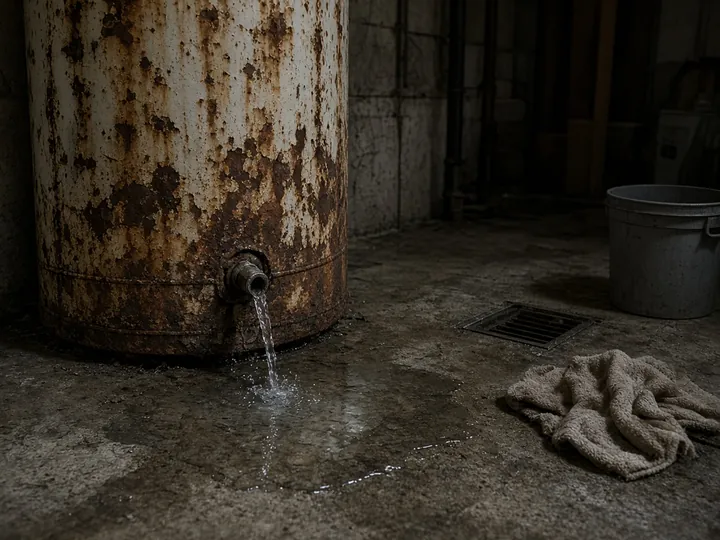
Water on the basement floor. A slow weep from a fitting, a relief valve that discharges, or a tank shell that has rusted through. The first two can often be fixed. The third means water heater replacement. If it is happening right now, read emergency water heater repair first.
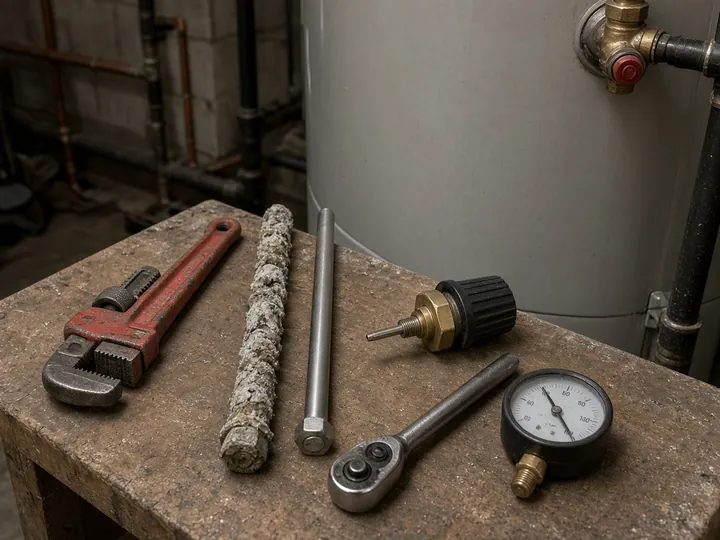
Rumbling, popping, or rusty water. Sediment on the tank floor, a worn anode rod, or corroding pipes. A flush and an anode check can help a tank that still holds water. Our general water heater repair page explains how to tell repairable from worn out.
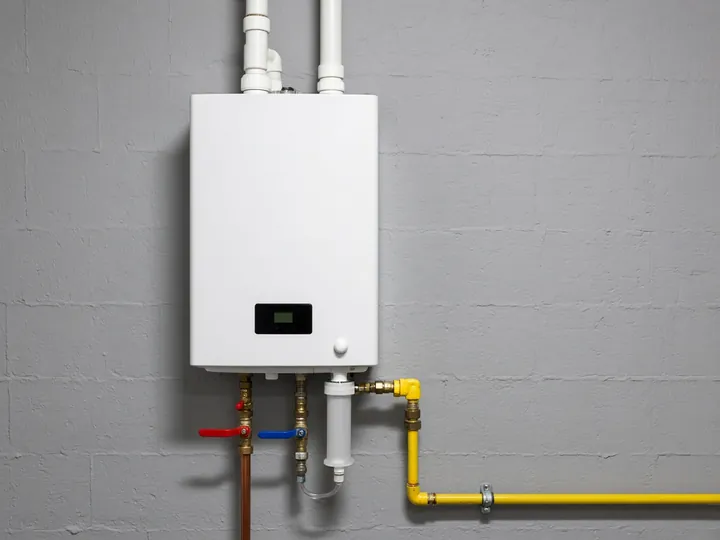
Error codes on a tankless unit. Ignition failures, flame loss, and scale warnings. See tankless water heater repair.
Water heater acting up? Talk it through by phone.
Call 000 000 0000Repair or replace?
A tank water heater in Chicago commonly lasts somewhere around eight to twelve years, depending on water quality, maintenance, and how it was installed. Age alone is not the decision. These questions are:
- Is the tank itself leaking? Water coming from the steel shell or seeping under the jacket cannot be repaired. The tank has to go.
- What failed? Thermocouples, elements, thermostats, drain valves, and relief valves are replaceable parts. A gas control valve on an older tank is expensive enough that replacement starts to make sense.
- How old is it? Read the rating plate. The serial number usually encodes the year. Our guide to dating a water heater shows how.
- Does the installation still fit the house? If the venting is wrong, the gas line is undersized, or there is no expansion tank on a closed system, a new heater should fix those at the same time.
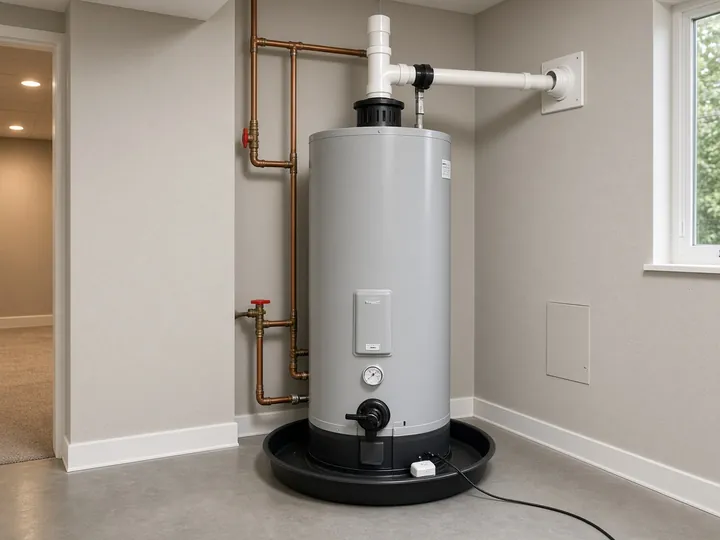
When replacement is the answer, a like-for-like swap is the simplest job. If you want more hot water, a different fuel, or a tankless water heater installation, the job becomes a new installation with more planning. Our page on water heater installation covers relocations and vent changes.
What Chicago's permit rules say
The Chicago Department of Buildings publishes a list of work that does not need a building permit. For residential buildings up to four stories, repairing or replacing a hot water heater in kind, meaning the same type, size, and shape, is on that list. The work still has to meet the Chicago Plumbing Code.
If the new heater is a different type or size, moves to a new spot, or sits in a taller building, the city's Express Permit Program handles the plumbing permit, and it expects a licensed plumbing contractor in most cases. Suburbs set their own rules, so check with the village or city. Our Chicago permit guide has the detail, and the state's rules come from the Illinois Department of Public Health plumbing program.
Gas safety comes first
If you smell gas near the heater, leave the house and call your gas utility from outside. Inside city limits that is Peoples Gas; most nearby suburbs are served by Nicor Gas. Do not flip switches or try to relight anything. Every home with a gas water heater should have working carbon monoxide alarms, and Illinois law requires them in most homes with fuel-burning appliances.
Neighborhoods and suburbs
We write about water heaters across the city, from the two-flats around Humboldt Park to the vintage courtyard buildings near Lincoln Park and the bungalows a few blocks from Wrigley Field. The same basement-and-chimney story repeats on the West Side near the Garfield Park Conservatory and along the Lakefront Trail high-rises, with different equipment.
Beyond the city limits, we have dedicated pages for Evanston, Oak Park, Cicero, Berwyn, Skokie, Oak Lawn, Park Ridge, and Des Plaines. Each one covers that suburb's housing, water supply, and building department. The service-area overview puts them on one map.
How to get help
This site is calls only. There is no form to fill out and nothing to sign up for. Before you call, take a photo of the heater's rating plate, note whether it is gas or electric, and describe what changed. That is usually enough to tell whether you are looking at a part, a repair visit, or a replacement. The guides section covers the rest.