Emergency water heater repair in Chicago, IL starts with safety, not tools. If you smell gas, leave the building and call your gas utility from outside. If water is pouring out, close the cold-water valve above the heater, shut off the gas or the breaker, and move belongings away. Most water heater emergencies can be contained in minutes with those steps, and the repair-or-replace decision can wait until the water is stopped.
Step one: rule out gas
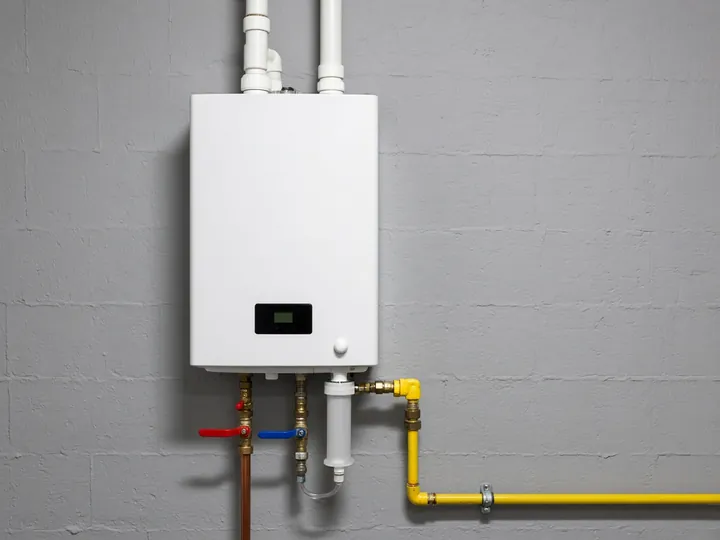
A gas smell near the heater outranks everything else. Get everyone out, leave doors open behind you, and do not use light switches, phones, or anything that could spark inside. Call the gas utility from outside: Peoples Gas inside the city, and Nicor Gas in most nearby suburbs. They handle gas leaks directly. Only after the utility has cleared the building should anyone work on the heater.
If a carbon monoxide alarm is sounding, treat it the same way: get out and call 911 or the fire department.
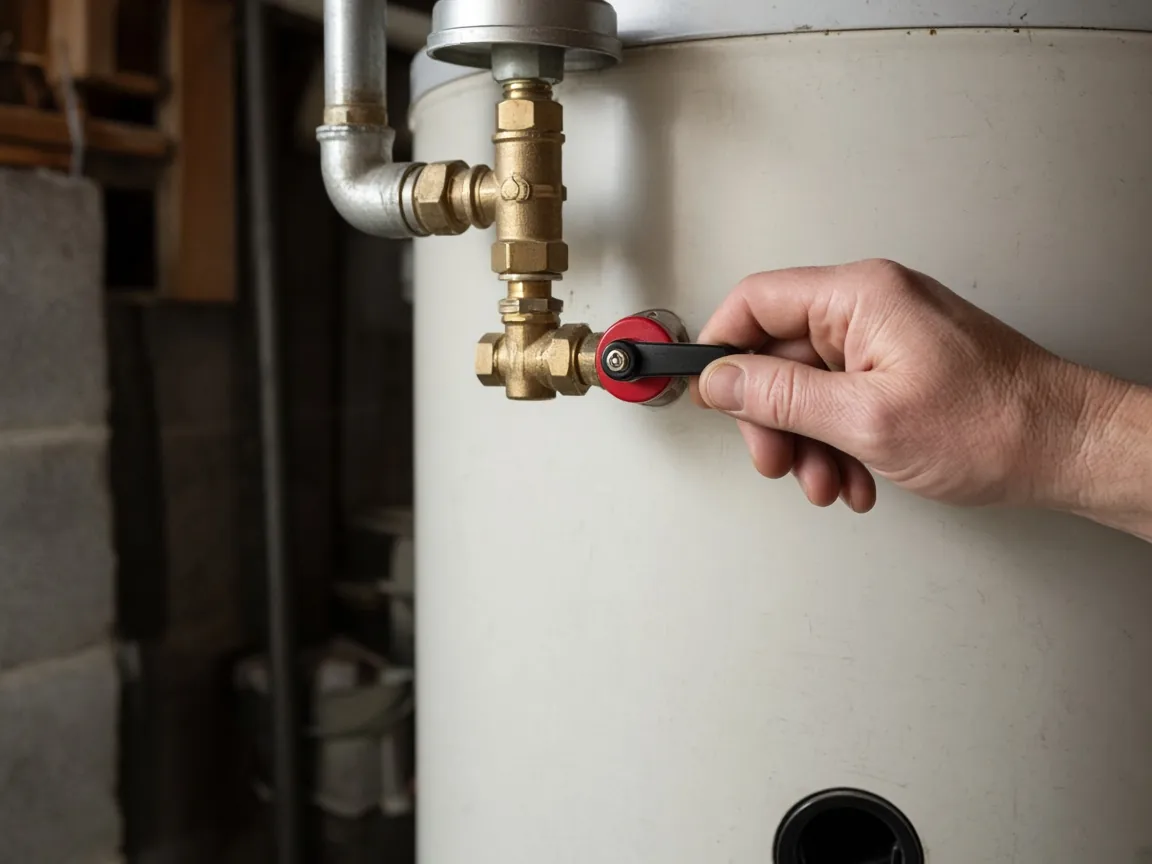
Step two: stop the water
The cold-water shutoff is on the pipe that feeds the top of the heater. Turn a lever valve a quarter turn so the handle sits across the pipe; turn a round handle clockwise until it stops. If it will not move, or it is leaking itself, close the main water shutoff where the water service enters the building. In many Chicago bungalows and two-flats that is near the front basement wall.
Opening a hot-water faucet upstairs relieves pressure and slows a leak from a fitting.
Water heater acting up? Talk it through by phone.
Call 000 000 0000Step three: cut the energy
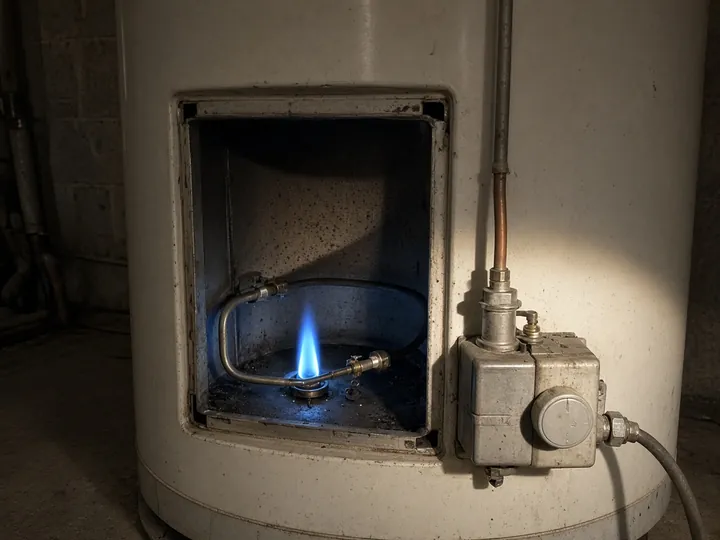
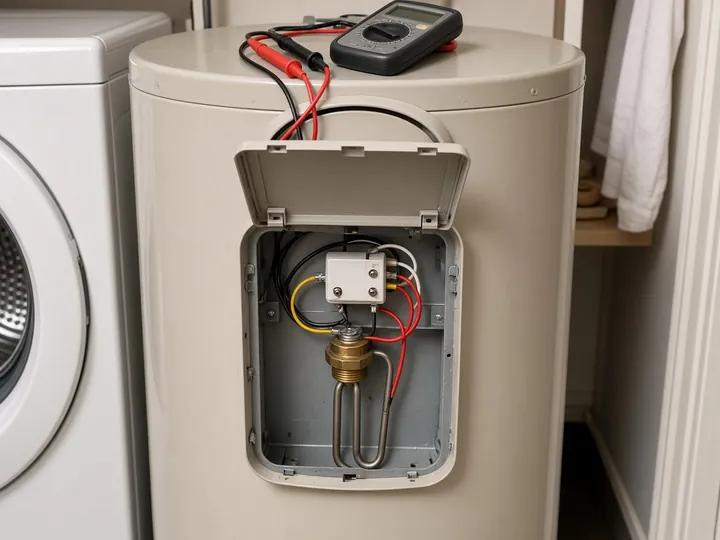
On a gas heater, turn the gas control knob to off or pilot. On an electric heater, switch off the double breaker in the panel. A heater that is drained or empty with the burner or elements still on can be damaged quickly, and an electric element that fires in an empty tank burns out.
Step four: find the source
Once things are calm, look for where the water is actually coming from.
- Relief valve pipe. The discharge pipe on the side of the tank is running. This means the temperature or pressure inside the tank is too high, or the valve is worn. Do not cap or plug it. See our relief valve guide.
- Top fittings. Drips at the cold inlet, hot outlet, or flexible connectors often come from a loose or corroded connection and can be repaired.
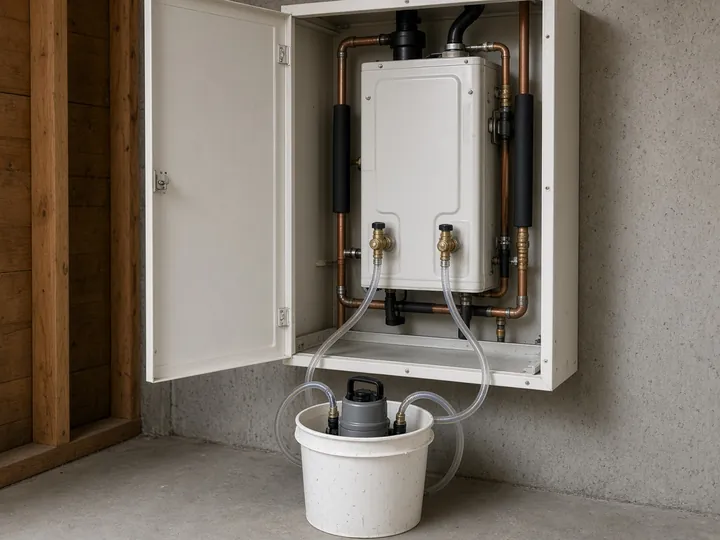
- Drain valve. A weeping drain valve near the bottom is usually a simple part.
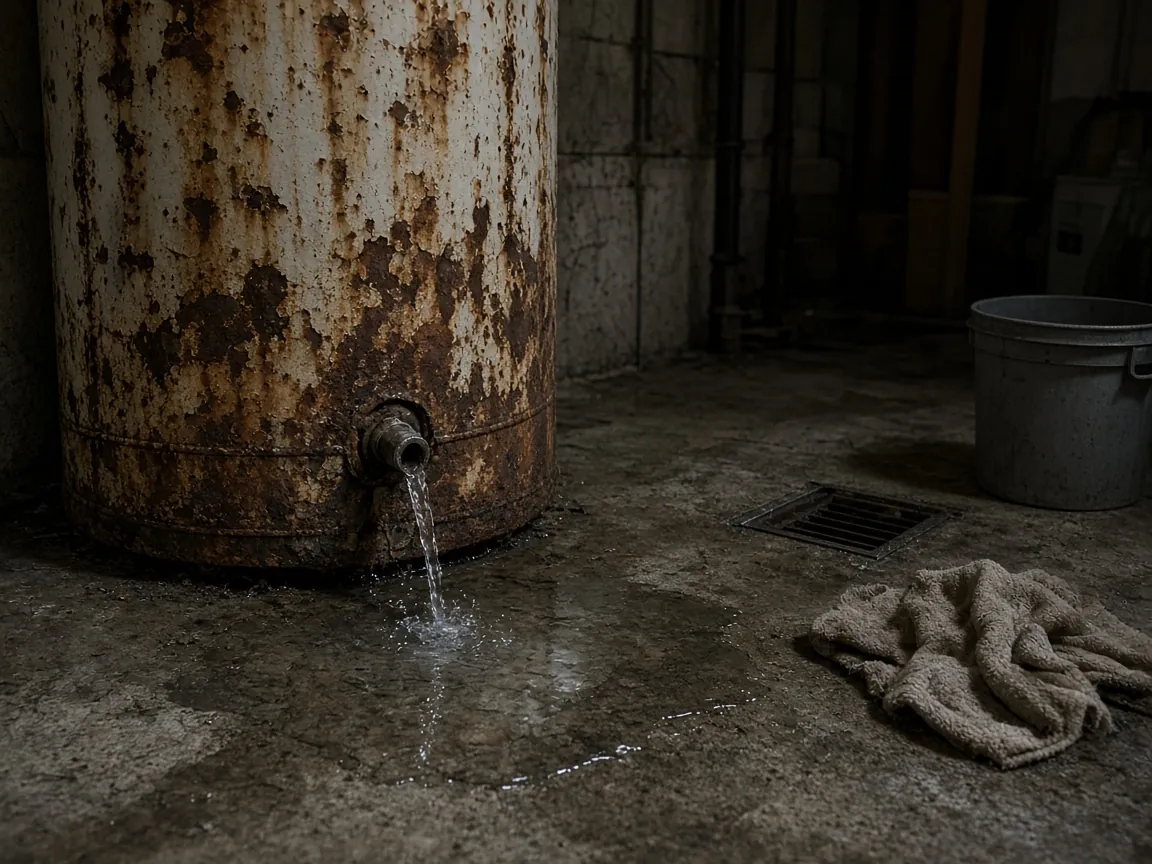
- Tank shell. Water seeping from under the jacket or out of the bottom of the tank means the steel has corroded through. That heater must be replaced.
Protecting the basement
Chicago basements are often full of storage, laundry, and sometimes finished rooms. Move boxes off the floor, keep the floor drain clear, and use towels to steer water toward it. If the basement is flooded from a storm rather than from the heater, a gas heater whose burner compartment was underwater should not be relit until it has been checked; see our basement flood guide.
Winter emergencies
A tank that fails in a polar-vortex week, when crowds have thinned at Millennium Park and even the Lakefront Trail is empty, needs extra care. If the heat is also off, pipes near outside walls can freeze. Keep the heat on if the furnace works, and do not leave a drained heater in a freezing space. The National Weather Service Chicago office posts cold warnings.
After the emergency
With the water off and the energy off, the heater is safe to leave until someone can diagnose it. Take photos of the rating plate and the leak source. A fitting or valve repair can put the heater back in service; a tank leak means water heater replacement. If the heater lost its pilot and nothing is leaking, start with gas water heater repair.
The emergency order of steps in Chicago
- Gas odor ruled out first: leave, then call the gas utility from outside
- Cold supply valve closed above the heater, or the house main if it will not turn
- Gas control set to off or the breaker switched off before draining
- Leak source identified: relief valve, fitting, drain valve, or tank shell
- Relief valve left alone and uncapped; heater allowed to cool
- Floor drain kept clear and stored boxes moved off the basement floor
- Photos taken of the rating plate and any damage for later decisions
An emergency card for Chicago homes
Make a small emergency card for every Chicago home and tape it near the heater: where the cold shutoff is, where the house main is, which breaker feeds an electric tank, and how to turn a gas control to off. Add the gas utility's emergency number and a reminder to call from outside. Test once a year that the shutoff actually turns.
Emergency water heater repair in nearby suburbs
Each suburb page covers local housing, water, and permit notes for this service.
- Emergency water heater repair in Evanston
- Emergency water heater repair in Skokie
- Emergency water heater repair in Oak Park
- Emergency water heater repair in Cicero
- Emergency water heater repair in Berwyn
- Emergency water heater repair in Oak Lawn
- Emergency water heater repair in Park Ridge
- Emergency water heater repair in Des Plaines
Chicago at a glance
- Coverage: Chicago, Illinois and nearby suburbs, shown on the map at city level, not a business address.
- Places named on this site include Millennium Park, Lincoln Park, and the Lakefront Trail.
- Permits: the Chicago Department of Buildings lists which plumbing work needs no permit.
- Utilities: Peoples Gas inside the city and ComEd for electricity.
Related pages
Suburb versions of this page include emergency water heater repair in Des Plaines, where river flooding adds its own risks, and emergency water heater repair in Cicero, where two-flat basements often hold two tanks. General troubleshooting is on water heater repair.