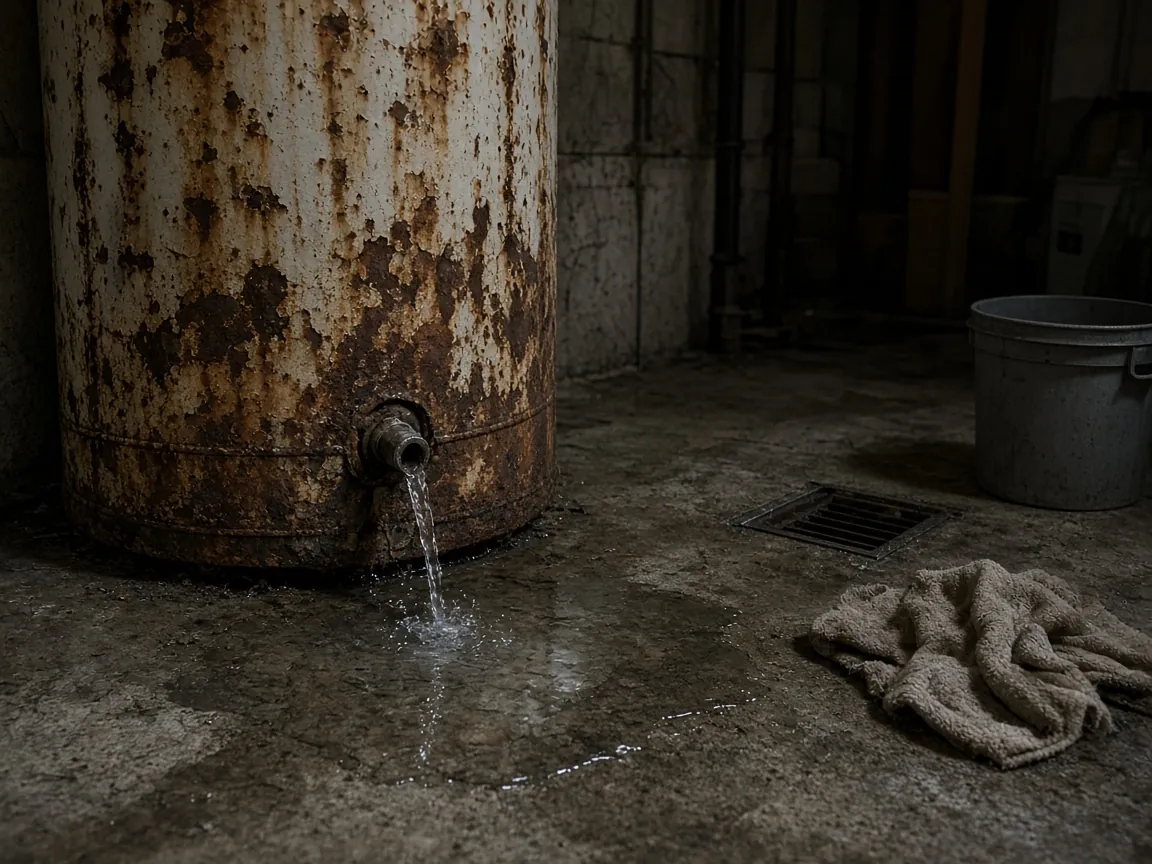
If floodwater reached a water heater's burner, gas control, thermostat, or wiring, do not relight or power it until it has been inspected. Many flooded gas controls must be replaced, and sometimes the whole heater. Keep people away from electrical equipment standing in water, let the water recede, and then have the heater, vent, and gas connection checked before use.
Why Chicago basements flood
Heavy summer storms can overwhelm sewers and push water into basements through floor drains, and groundwater can seep through older foundations. Suburbs along the Des Plaines River face river flooding too. The National Weather Service Chicago office issues flood warnings when storms are expected.
Immediate steps
- Stay out of standing water near electrical equipment.
- If it is safe, switch off the breaker for an electric heater, or turn the gas control to off.
- If you smell gas, leave and call your gas utility from outside. In Chicago that is Peoples Gas; in most suburbs it is Nicor Gas.
- Wait for the water to recede.
Water heater acting up? Talk it through by phone.
Call 000 000 0000Why flooded controls are replaced
Gas controls have internal passages and valves that can corrode or clog after immersion. Manufacturers generally advise replacing any gas control that has been under water. Burners, pilot assemblies, and thermocouples may also be damaged.
Electric heaters
Thermostats, elements, and wiring can be damaged. Insulation inside the jacket may stay wet. Have it inspected before use.
Replace or repair
If water reached the controls of an older tank, replacement is often simpler. See water heater replacement in Chicago. For a newer tank, replacing the control may be enough; see gas water heater repair in Chicago.
Preventing the next one
- Elevate the new heater on a platform.
- Keep floor drains clear and consider backflow protection.
- Add a leak alarm or automatic shutoff.
- Store belongings off the floor.
Local note
Homes near the Des Plaines River and in Park Ridge have seen repeated basement flooding. Our pages on emergency water heater repair in Des Plaines and water heater replacement in Park Ridge cover local concerns.
Cleaning up around the heater
Once the heater is off and the water is gone, remove wet storage, run fans and a dehumidifier, and pull up wet carpet and pad. Drywall that soaked up water may need to be cut out at the bottom to prevent mold. Wipe down the outside of the heater, but do not try to dry or clean the gas control or burner yourself.
Insurance
Many homeowner policies treat sewer backup differently from other water damage, and some require a separate rider. Photograph the heater, the water line on walls, and damaged items. Keep receipts for cleanup and repairs.
What an inspection covers
After a flood, an inspection typically looks at the gas control, burner, pilot assembly, thermocouple or flame sensor, flue baffle, vent connector, and the gas connector and shutoff. For electric heaters, it covers elements, thermostats, wiring, and the junction box. The tank's insulation may also be wet, which can lead to rust inside the jacket.
Raising the heater
If you replace the heater, placing it on a sturdy platform raises the burner and controls above typical water levels. The vent connector, gas line, and water lines must be adjusted to the new height, and the relief valve discharge pipe must still terminate correctly.
Backflow and drains
Overhead sewers, backwater valves, and standpipes in floor drains are common ways to reduce sewer backup in Chicago-area basements. A licensed plumber can explain the options for your home.
Drain pans
A pan under the heater does not stop a flood, but it catches small leaks from the heater itself, which helps you tell the difference between a heater leak and water from elsewhere.
A note on carbon monoxide
After a flood, debris can block a gas heater's flue or burner area. Even after repairs, keep carbon monoxide alarms near the heater and on every sleeping floor, and test them monthly.
Electric safety
Never step into standing water to reach a breaker panel. If the panel is in the flooded area, wait for the utility or an electrician.