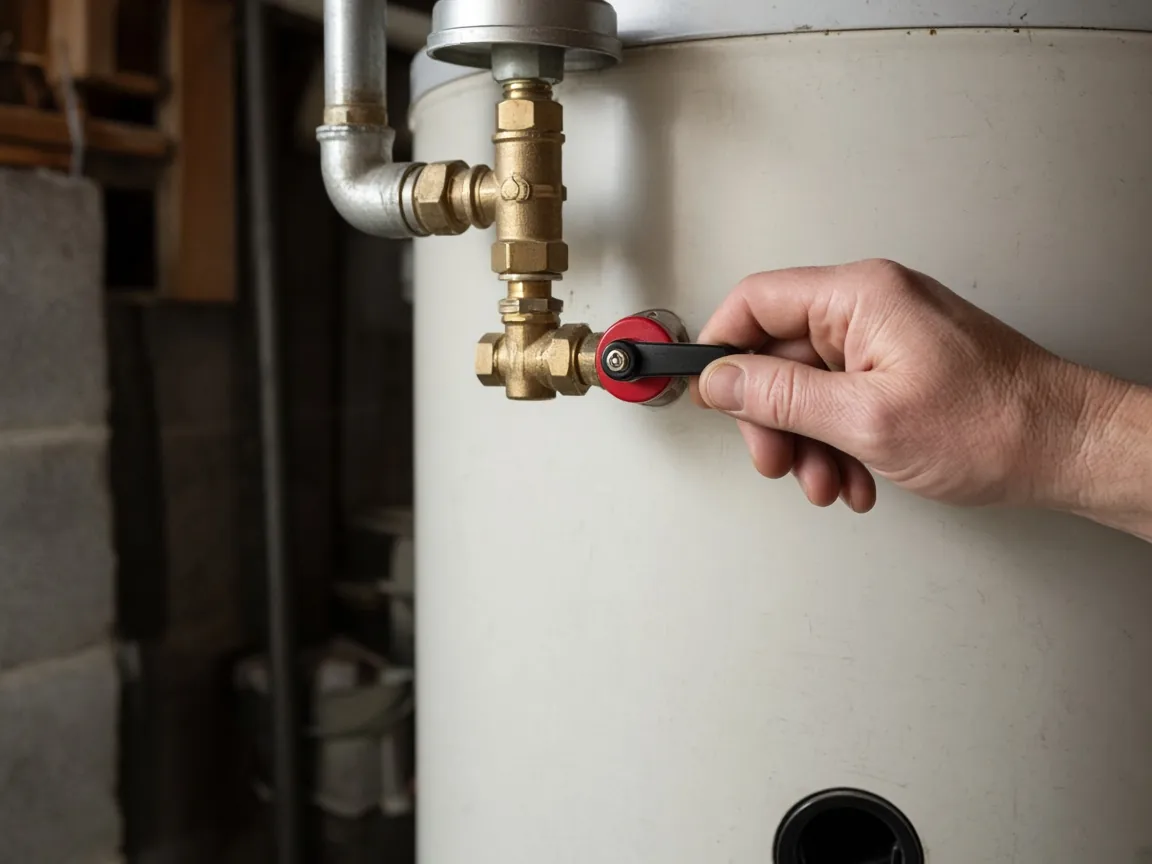
A dripping temperature and pressure (T&P) relief valve usually means pressure in the tank is rising too high, most often from thermal expansion in a closed plumbing system with no expansion tank, or the valve itself is worn. Sometimes the water is too hot because of a thermostat or gas control problem. Never cap or plug the valve. Find and fix the cause.
What the valve does
The T&P valve opens if tank pressure or temperature gets too high, preventing a dangerous failure. It discharges through a pipe that should run down to within a few inches of the floor or to a drain.
Common causes of dripping
Thermal expansion. Water expands when heated. If a check valve or pressure-reducing valve closes the system, expanding water has nowhere to go. Pressure rises and the valve drips. An expansion tank fixes it.
High street pressure. If incoming pressure is high, a pressure-reducing valve helps.
Worn valve. Valves wear, and debris can keep them from sealing.
Overheating. A stuck thermostat or failed gas control. This is serious; turn off the heater.
Water heater acting up? Talk it through by phone.
Call 000 000 0000Checking pressure
Screw a pressure gauge onto a hose bib or the heater's drain valve. Static pressure above about 80 psi is high. Watch whether pressure climbs while the heater runs; if it does, thermal expansion is likely.
Testing the valve
Lift the lever briefly to let water out, then release. If it keeps dripping afterward, the valve may need replacement.
When it is an emergency
A valve blowing hot water or steam means turn off the energy, keep clear, and let the tank cool. See emergency water heater repair in Chicago.
Code and discharge
Illinois plumbing standards are set through the IDPH plumbing program. The discharge pipe must not be reduced, capped, or threaded at the end.
Repair
Expansion tanks and valve replacements are common repairs. See water heater repair in Chicago.
Local note
Many Chicago greystones near Garfield Park Conservatory have had new water meters installed, which can close the system and start the dripping.
Expansion tanks explained
A thermal expansion tank is a small steel tank with an air bladder inside, installed on the cold-water line near the heater. When water expands during heating, it pushes into the tank against the air cushion instead of raising system pressure. The air side must be precharged to match the home's water pressure. A tank that has lost its charge, or has a ruptured bladder, no longer works and the relief valve may start dripping again. Tapping the tank can help: the top should sound hollow, the bottom full. If the whole tank sounds full, the bladder may have failed.
Pressure-reducing valves
Many Chicago-area homes have a pressure-reducing valve near the main shutoff. It protects fixtures from high street pressure but also closes the system, which is why an expansion tank is needed. These valves wear over time, so if pressure creeps up, the valve may need adjustment or replacement.
Replacing the T&P valve
Replacement means shutting off the cold supply, relieving pressure, draining a little water, and threading in a new valve of the correct rating. The discharge pipe should be reconnected and must run down to within a few inches of the floor or to an approved drain, with no reduction in size. Test the new valve and check for leaks.
Where the water goes
Some relief valve pipes empty into a floor drain or pan. If yours drips onto a finished floor, that is another reason to fix the cause promptly.
A pressure check you can do
Buy an inexpensive gauge that threads onto a hose bib. Read it with no water running, then again after the heater has run a cycle with no water use. If the reading climbs significantly, thermal expansion is the cause and an expansion tank is the usual fix. If the static reading is high to begin with, the pressure-reducing valve needs attention.
Related guides
See flushing a water heater and flooded basements.