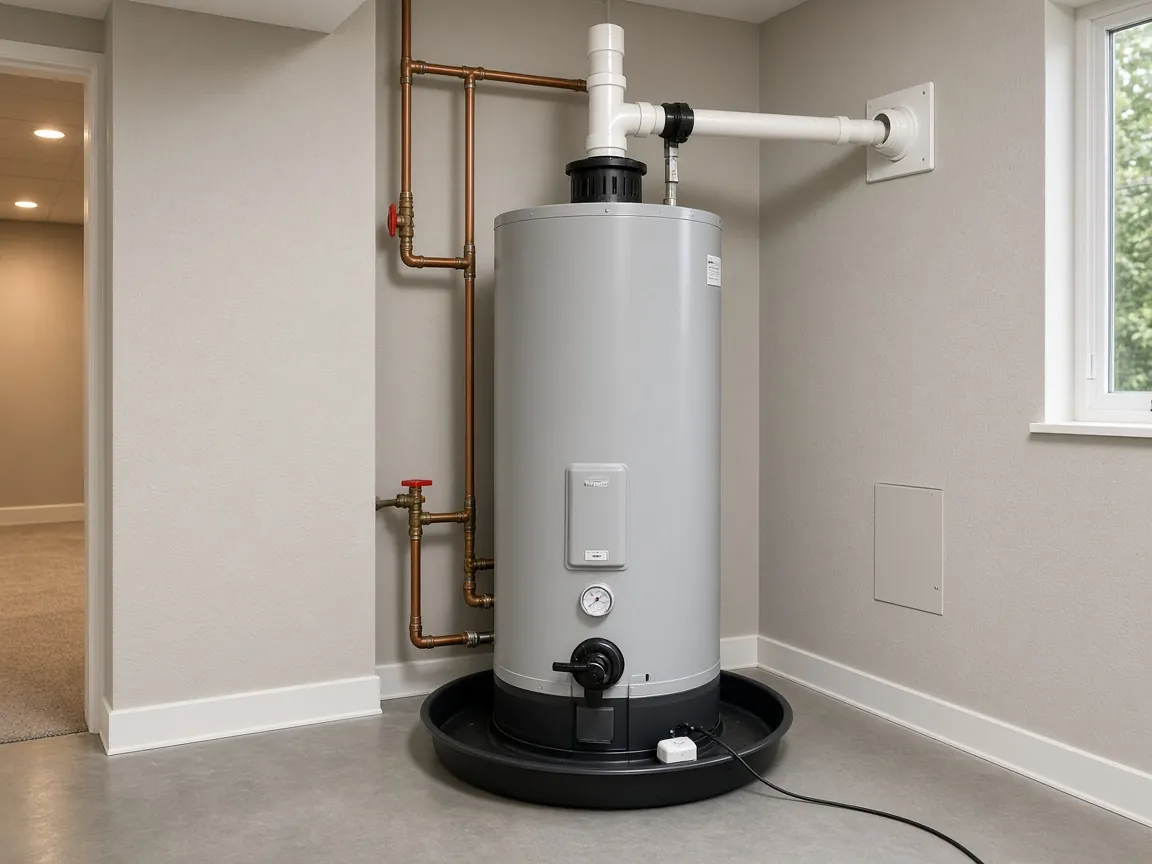
An orphaned water heater is one left venting alone into a masonry chimney after the furnace or boiler that shared it was replaced with a high-efficiency model that vents through the wall. The water heater's small exhaust may not warm a big, cold Chicago chimney enough to draft, which can lead to exhaust spillage, condensation that damages the chimney, and carbon monoxide risk. Common fixes are a properly sized chimney liner, a power-vent water heater, or another venting approach.
Why it happens so often in Chicago
Bungalows, two-flats, and greystones across Chicago and suburbs like Berwyn and Cicero were built with large masonry chimneys for coal and later gas boilers and furnaces. Over the past few decades, many furnaces were replaced with condensing models that vent through plastic pipe in the wall. That left the water heater alone in a flue sized for two appliances.
The physics, simply
A chimney drafts because warm exhaust is lighter than outside air. A furnace and water heater together produced enough heat to warm the flue. A water heater alone, especially on a cold Chicago morning, may not. The exhaust cools, slows, and can spill back out of the draft hood. Water vapor in the exhaust condenses on cold masonry, dissolving mortar and leaving white deposits.
Water heater acting up? Talk it through by phone.
Call 000 000 0000Warning signs
- Scorch or rust marks around the draft hood.
- White crust, moisture, or debris at the chimney cleanout.
- A pilot that goes out on cold or windy days.
- A musty or exhaust smell near the heater.
- A carbon monoxide alarm sounding.
Chicago's winters, which the National Weather Service Chicago office tracks closely, make the problem worse when the temperature drops.
How to check
With the water heater firing and exhaust fans on, hold smoke near the draft hood. If it is drawn up, draft is working. If it rolls out, turn the heater off and have it inspected. A professional can also measure draft and check the flue size against the appliance.
The fixes
Chimney liner. A stainless or aluminum liner sized for the water heater runs down the chimney. It warms quickly and protects masonry.
Power-vent water heater. A fan pushes exhaust through a side wall. The chimney is no longer needed for the water heater. See water heater installation in Chicago.
Tankless. Also vents through the wall. See tankless water heater installation in Chicago.
Heat pump water heater. No combustion at all, so no vent.
Do not ignore it
Spillage can put carbon monoxide into a home. Keep alarms near the heater and on sleeping floors. If you have had a furnace upgrade, have the water heater's venting checked.
Local example
In the bungalow belt around Berwyn's Proksa Park and in the two-flats near the Hawthorne Works area of Cicero, orphaned chimneys are common. Our Berwyn gas water heater repair page covers it in detail.
What a liner job involves
A chimney liner installation usually starts with an inspection of the chimney's condition and a measurement of the flue. The liner, sized to the water heater's vent connector and input, is lowered from the roof and connected at the bottom to the vent connector through a tee with a cleanout cap. The top is fitted with a cap to keep rain and animals out. In some Chicago two-flats, two water heaters share the chimney, and the liner must be sized for both. Expect the work to take a few hours to a day, depending on roof access. Afterward, a draft test with the heater running confirms the fix.
Questions to ask before a fix
Ask whether the chimney was inspected, what size liner is proposed and why, whether a draft test will follow, and whether a power-vent or heat pump option would cost less over time. Ask too whether the furnace and water heater will ever share the flue again; if the answer is no, the liner should be sized for the water heater alone.
Related guides
See winter hot water problems and how old is my water heater.