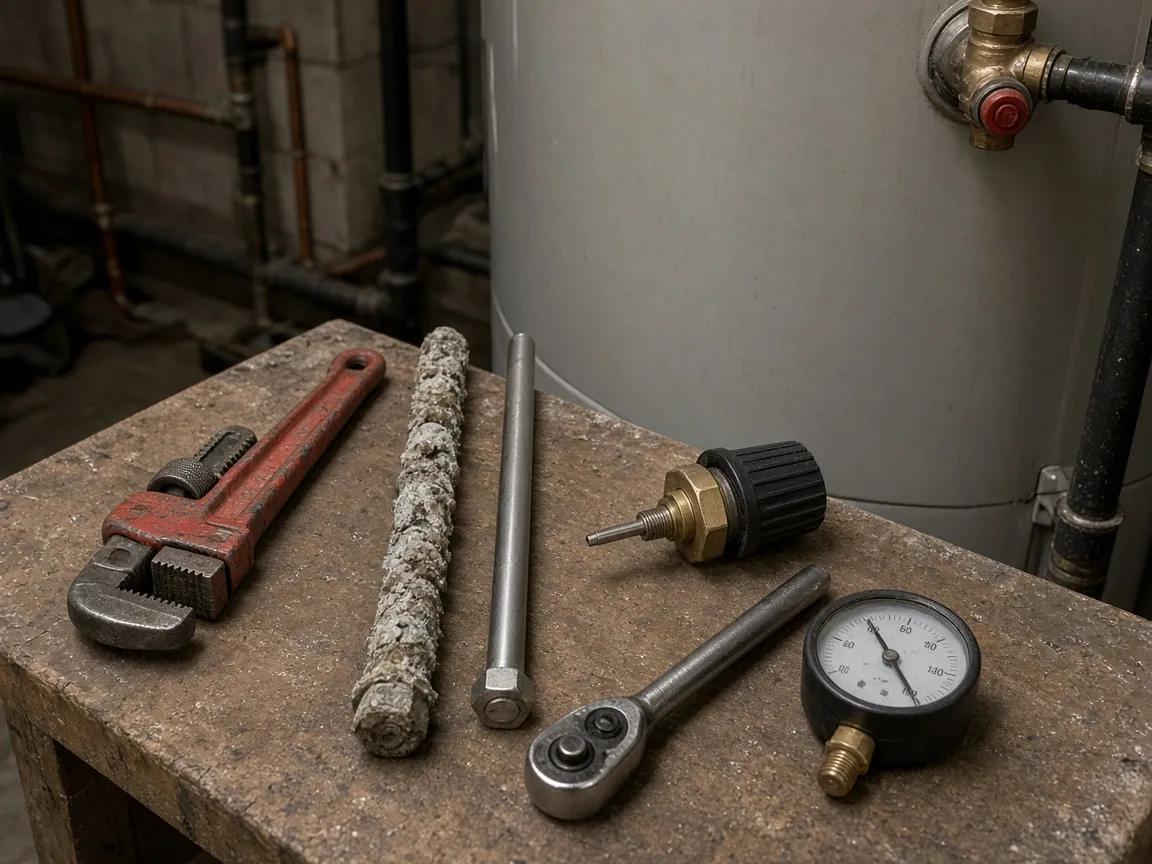
An anode rod is a metal rod inside a tank water heater that corrodes on purpose to protect the steel tank. When the rod is used up, the tank itself starts to rust. Checking the anode every few years, and replacing it when much of the core wire is exposed, can extend a tank's life. Anode rods also play a role in rotten-egg smells in hot water.
How it works
Water heater tanks are steel lined with glass. Small flaws in the lining expose steel. The anode, usually magnesium or aluminum, is more reactive than steel, so it corrodes first. As long as there is enough anode left, the tank is protected.
How long it lasts
It depends on water chemistry, temperature, and use. On Chicago's Lake Michigan water, many anodes last several years. Checking every three to five years is reasonable.
Water heater acting up? Talk it through by phone.
Call 000 000 0000Checking the anode
- Turn off the gas or power and close the cold supply.
- Drain a few gallons.
- Loosen the anode hex on top of the tank (it can be very tight).
- Pull it out and inspect. If the core wire is exposed along much of its length, replace it.
Low ceilings in Chicago basements can make removal hard. Flexible, segmented anodes help.
Rotten-egg smell
A sulfur smell in hot water often comes from bacteria reacting with a magnesium anode. Switching to an aluminum-zinc anode or a powered anode and flushing the tank often fixes it. See our Berwyn page on water heater repair in Berwyn for more.
Water softeners
Softened water can consume anodes faster. Check more often if you have a softener.
When it is not worth it
On a tank already leaking, a new anode will not help. See water heater replacement in Chicago. On a younger tank, an anode replacement is inexpensive insurance; see water heater repair in Chicago.
Energy and efficiency
A healthy anode does not change efficiency directly, but a longer-lasting tank delays replacement. When replacement comes, ENERGY STAR's heat pump water heater page shows efficient options.
Local note
Many basement tanks in bungalows of the type promoted by the Historic Chicago Bungalow Association sit under low beams that make anode removal tricky. Plan for it.
Types of anode rods
Magnesium. The most common original anode. Very protective, but can cause odor with some water.
Aluminum or aluminum-zinc. Lasts longer in some water and often reduces odor. Zinc in the alloy helps with sulfur smell.
Powered anode. Uses a small electric current instead of a sacrificial metal. It does not wear out the same way and can help with odor, but it needs power to work.
Tools and tips
Anode hex nuts are often very tight after years in place. A long breaker bar and a socket of the right size help, and a second person may need to hold the tank steady so it does not twist and stress the pipes. Never use the tank as leverage against its connections. In a tight basement under low beams, a flexible segmented anode can be bent in as it goes down, which is often the only way to fit it.
Thread sealant
Use a sealant rated for potable water on the anode threads, and check for leaks after refilling the tank.
Signs the anode is spent
Rusty hot water, a tank that is past several years old with no anode check, and visible corrosion at the anode port are all signs worth checking. Sometimes, when the anode is removed, all that remains is a bare steel wire. That means the tank has been unprotected for some time and its remaining life may be short.
Cost compared with a tank
An anode rod costs a small fraction of a new water heater. On a tank under about eight years old, checking and replacing it is one of the most cost-effective maintenance tasks available, especially in a basement where replacing the tank itself would be difficult.
Related guides
See how to flush a water heater and how old is my water heater.