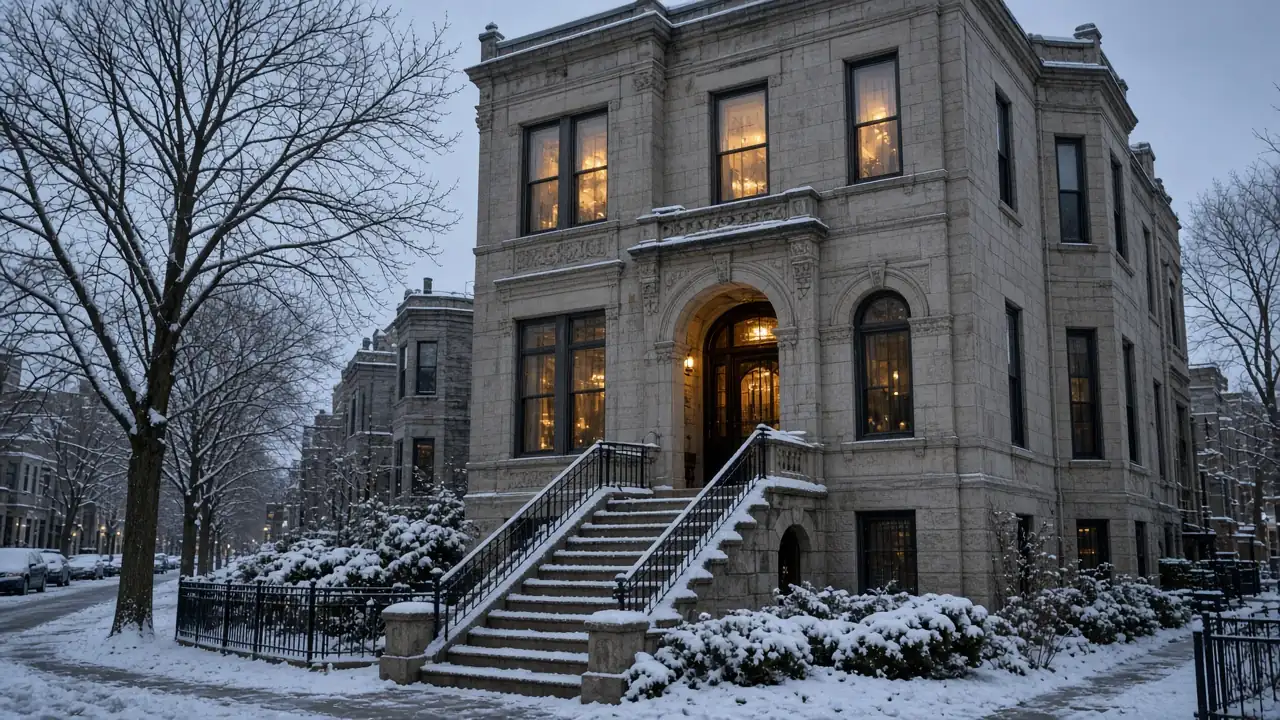
Hot water runs short in Chicago winters mainly because the water entering the heater is much colder. Chicago draws from Lake Michigan, and in deep winter that water reaches homes near freezing. A tank or tankless unit must add far more heat to reach the same shower temperature, so the tank delivers fewer gallons of hot water and a tankless unit delivers fewer gallons per minute. Sediment, a broken dip tube, or a failing part can make it worse.
The numbers behind it
Most people shower at around 105°F. In summer, Lake Michigan water may reach homes in the 50s or 60s. In January and February it can be in the 30s. A shower in summer mixes a lot of cold water with hot; in winter it uses much more hot water to reach the same temperature. A fifty-gallon tank that gave three showers in August may give two in January.
Tankless units feel it differently
A tankless unit heats water as it flows. Its output depends on the temperature rise. At a 70°F to 75°F winter rise, a unit might deliver only half the flow it does in summer. If the unit was sized in warm months, winter can reveal it is too small. See tankless water heater repair in Chicago.
Water heater acting up? Talk it through by phone.
Call 000 000 0000Other causes to rule out
- Broken dip tube. Cold water enters the top of the tank and mixes with hot.
- Sediment. Takes up space and insulates the burner.
- Failed lower element (electric). Only the top half heats.
- Thermostat set low. Sometimes knocked down during cleaning.
What helps
- Stagger showers in the morning.
- Install low-flow showerheads.
- Insulate exposed hot water pipes, especially in cold basements.
- Flush sediment. See our flushing guide.
- Consider a larger tank or a mixing valve that lets you store hotter water safely.
Cold weather and pipes
The National Weather Service Chicago office issues wind chill alerts each winter. In very cold snaps, protect pipes near exterior walls, especially in two-flats and greystones with basement pipes near the foundation.
When to call
If hot water runs out much faster than last winter, or the water never gets fully hot, something may have failed. See water heater repair in Chicago.
Local note
Even on the coldest days, crowds still gather in Millennium Park downtown. At home, though, a January morning is the true test of a water heater.
A quick winter test
Run the hot water at a shower at full hot and time how long it stays hot. Compare that with a summer test if you remember one. If the time has dropped a lot more than you expect from the season alone, look for a cracked dip tube, heavy sediment, or a failed part.
Small changes that add up
Insulating the first several feet of hot and cold pipe at the heater cuts standby losses in a cold basement. A tank wrap may help on older, poorly insulated tanks; check the manufacturer's guidance first, since some newer tanks do not allow it and wraps must never cover a gas heater's controls, burner access, or draft hood. Low-flow showerheads stretch every gallon. Running the dishwasher and washing machine at times when nobody is showering also helps.
When to size up
If your household has grown, or you have added a bathroom, the original tank may simply be too small for a Chicago winter. Compare first-hour ratings when you shop, and size for the coldest months.
Recovery time
Recovery is how quickly a tank reheats after use. In winter, recovery slows because the burner has to lift colder water further. A gas tank recovers faster than a standard electric one, which is one reason many Chicago households notice the winter slump more with electric tanks.