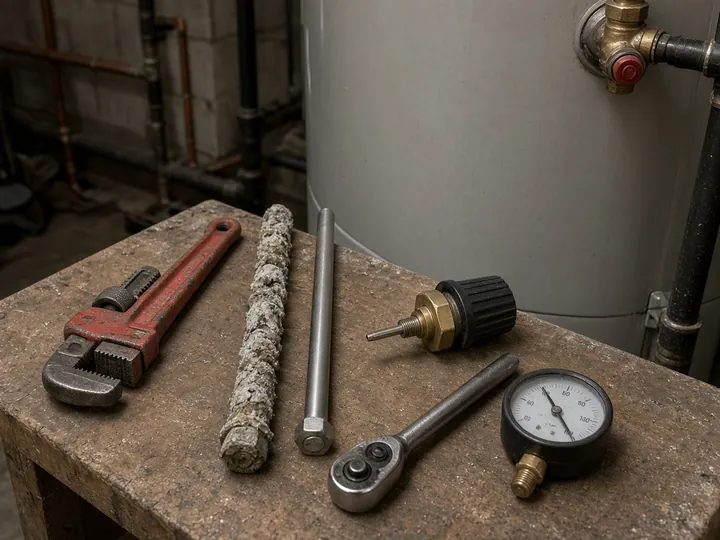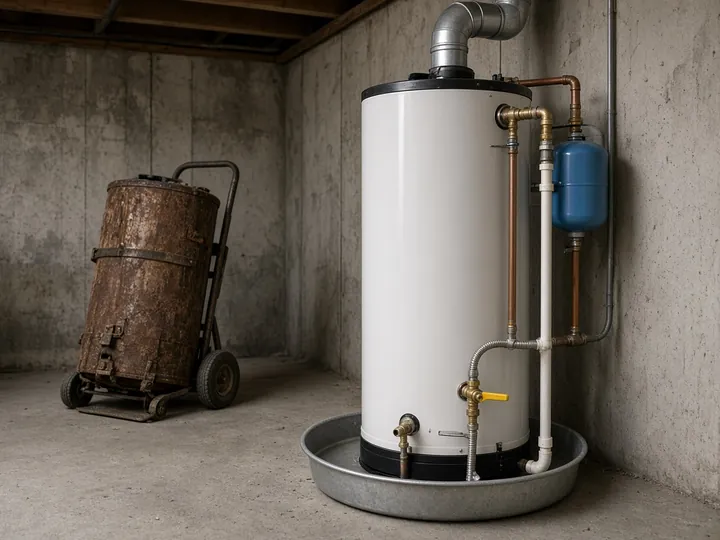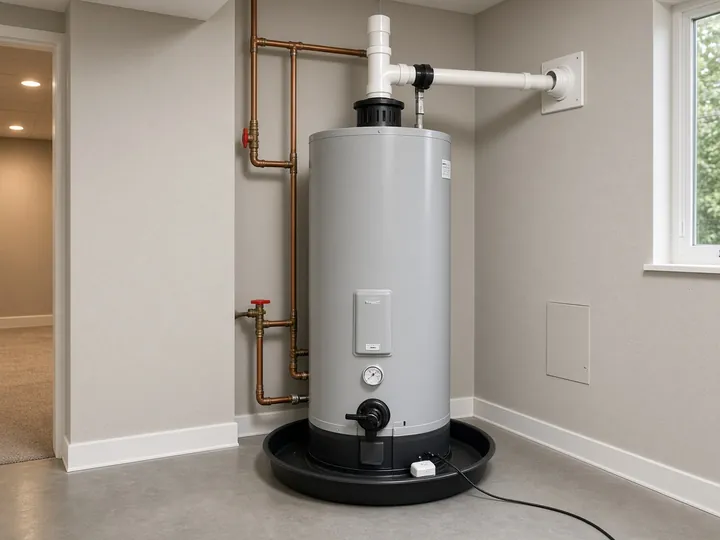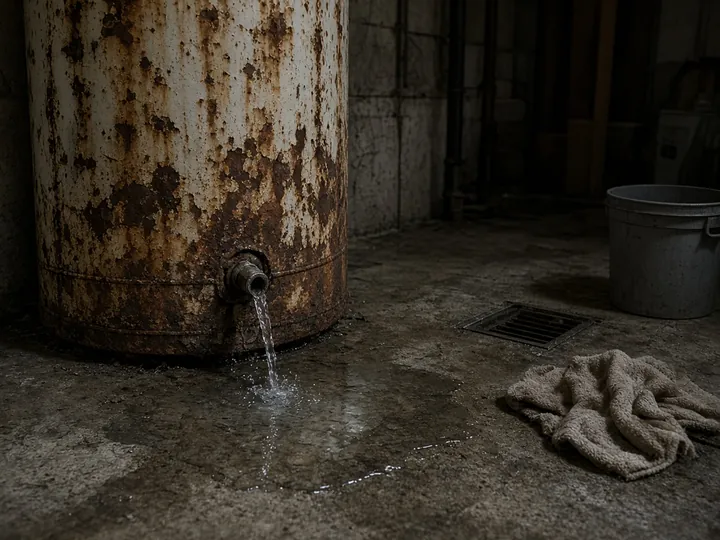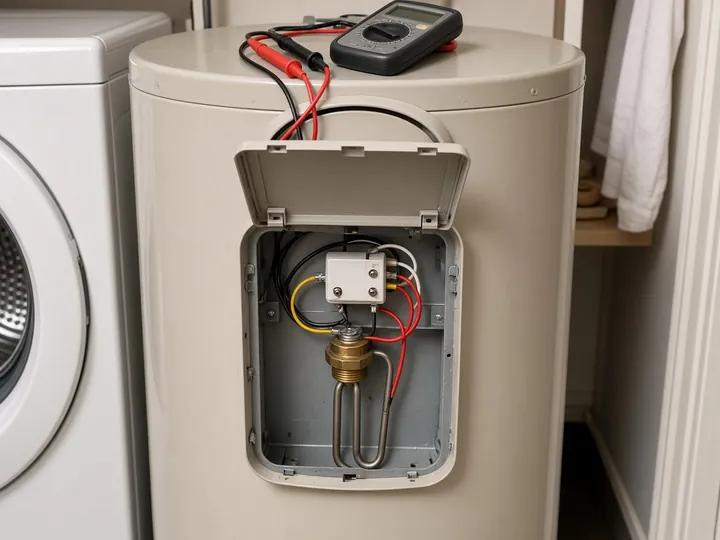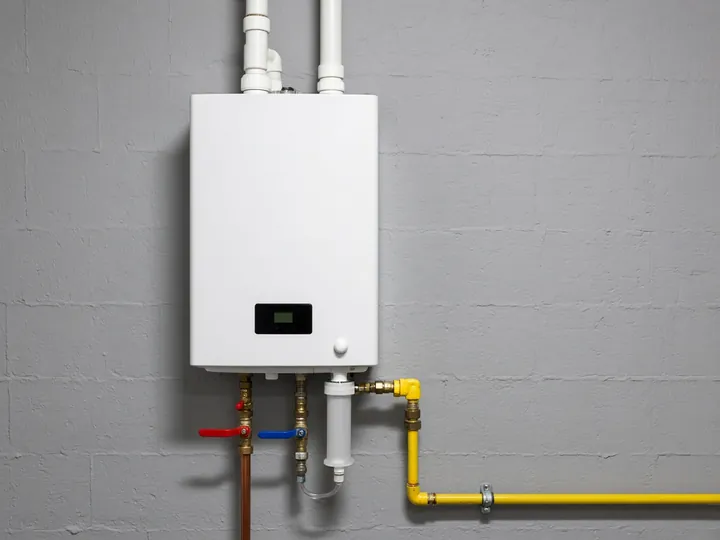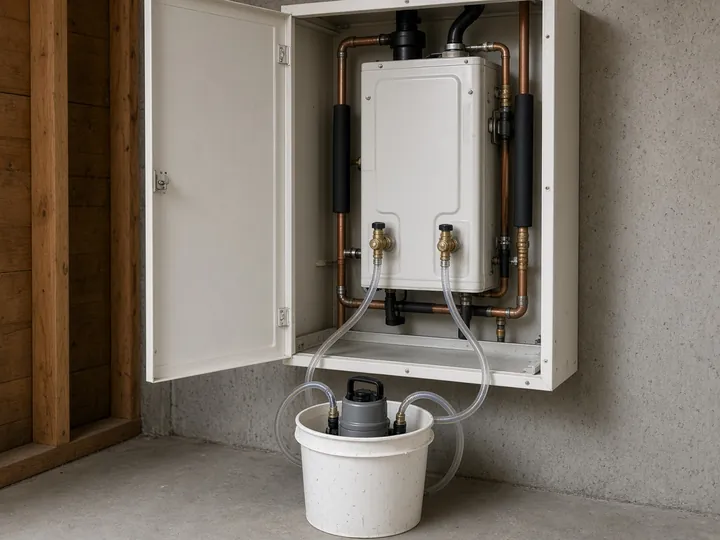
Gas water heater repair in Chicago, IL usually means getting a burner to light and stay lit, and making sure its exhaust actually goes up the chimney. The common failures are a worn thermocouple or thermopile, a dirty pilot, a failed igniter or flame sensor on newer models, a tripped flammable vapor sensor, and draft problems in old masonry chimneys. A failed gas control valve on an older tank often tips the decision toward replacement.
How a gas tank heater works
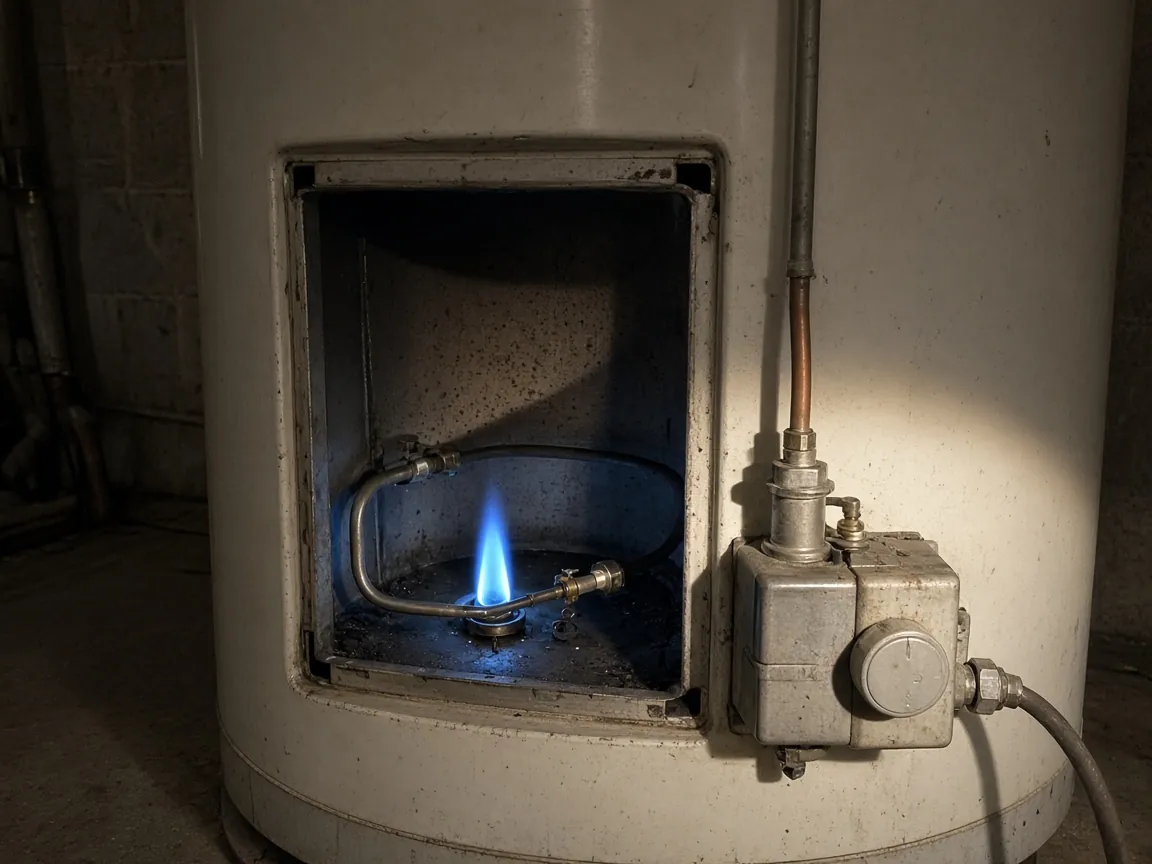
Most Chicago gas water heaters are atmospheric tanks. A gas control valve on the front senses water temperature and sends gas to a burner under the tank. On older models, a standing pilot flame heats a thermocouple, which generates a small current that tells the valve it is safe to open. Newer models may use a thermopile, a hot-surface igniter, or electronic ignition with a flame sensor. Exhaust rises through a flue tube in the middle of the tank, out a draft hood on top, and through a vent connector into the chimney or a B-vent.
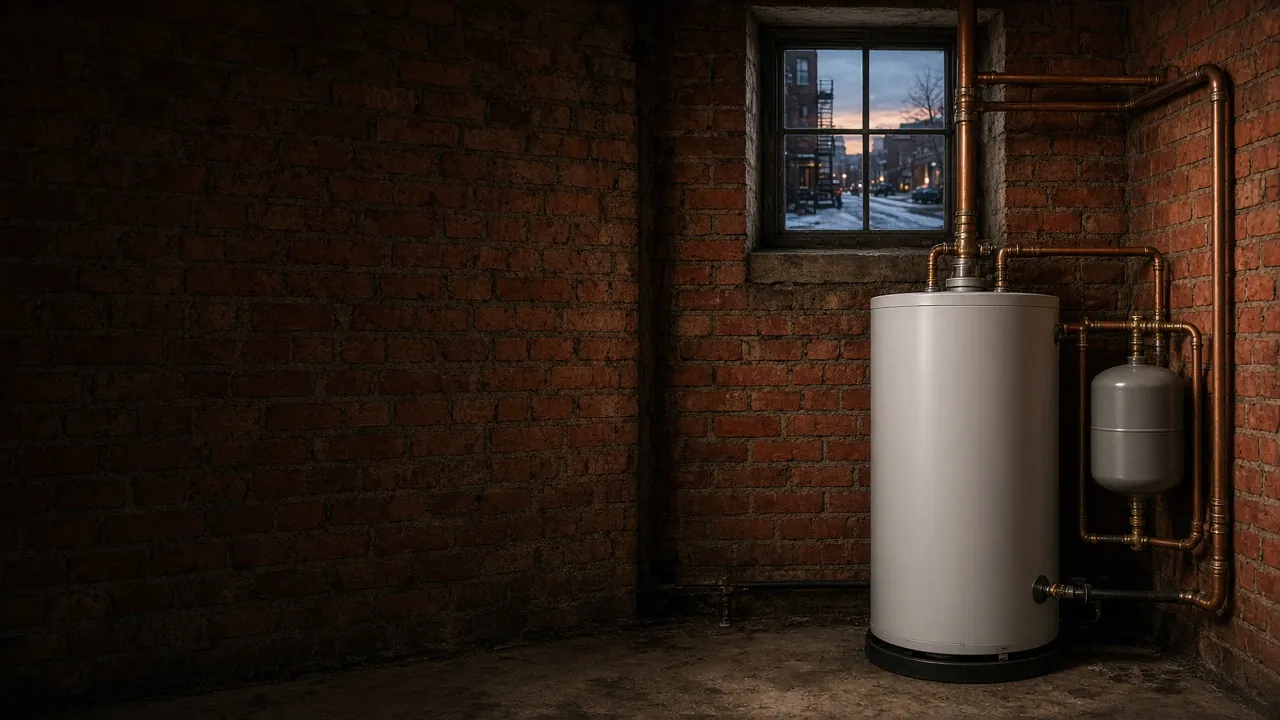
The usual suspects
Pilot will not stay lit. If the pilot lights but goes out when you release the button, the thermocouple is the first suspect. A weak or yellow pilot points to a dirty pilot tube or orifice.
Pilot lights, burner does not. The thermostat may be set too low, the gas control may be failing, or the burner orifice may be blocked.
Status light blinking. Many gas controls flash a code. The pattern is listed on the label or in the manual and saves a lot of guessing.
Flammable vapor sensor tripped. Most tanks built in roughly the last twenty years have a sealed combustion chamber with a sensor that shuts the heater down if it detects fumes from paint, solvents, or gasoline. A clogged flame arrestor screen at the bottom, often caked with lint from a nearby dryer, can also cause shutdowns. These safety devices must never be bypassed.
Flame rolls out, soot, or a smell when the burner runs. This is a venting problem until proven otherwise. Shut the heater off and have it checked.
Water heater acting up? Talk it through by phone.
Call 000 000 0000Chicago chimneys and draft
The most Chicago-specific gas repair issue is the chimney. Bungalows, two-flats, and greystones from the Northwest Side to the South Side often vent the water heater into a masonry chimney built for a coal or oil boiler. When the furnace or boiler was later replaced with a high-efficiency model vented through the wall, the water heater became the only appliance in that chimney. A small burner cannot warm a big, cold masonry flue, so exhaust can spill at the draft hood, condensation can form inside the chimney, and the mortar can break down. A draft test at the hood with the burner running tells you whether the vent is working. Our orphaned chimney guide covers the fixes, from a liner to a power-vent heater.
Wind is another factor. On blustery nights, the kind that make walking the Lakefront Trail a test of will, downdrafts at the chimney top can snuff a weak pilot. A properly sized and capped flue helps.
Combustion air
Gas heaters need air to burn cleanly. A heater closed into a small utility room in a remodeled basement may not get enough. Louvered doors or dedicated air openings sized for the appliances in the space solve this. The fix is often cheaper than people expect.
Carbon monoxide
Every home with gas appliances should have carbon monoxide alarms, and Illinois law requires them in most homes with fuel-burning appliances or attached garages. A repair visit should confirm they exist and work. The Peoples Gas safety page lists warning signs and what to do about a gas odor inside the city.
When the gas control valve fails
A gas control valve is the most expensive part on a tank heater. On a heater less than a few years old, replacing it can make sense, especially under warranty. On an older tank, the cost of the valve plus labor approaches a new heater, and the tank is already partway through its life. That is usually the point to look at water heater replacement.
What a gas diagnosis in Chicago should cover
- Gas valve position and supply to other appliances confirmed
- Pilot, thermocouple, thermopile, or hot-surface igniter tested
- Status light flash code read against the manufacturer chart
- Vent connector slope, joints, and chimney draft checked with the burner running
- Combustion air openings compared with the room and appliance load
- Burner, orifice, and flame arrestor screen inspected for lint and scale
- Flammable vapor sensor and thermal cutoff checked, never bypassed
- Carbon monoxide alarms confirmed on every level
Gas repair call prep for Chicago
Before a gas repair call in Chicago, note the brand and model, whether the heater has a standing pilot or electronic ignition, and any blinking pattern on the gas control. Mention whether the trouble lines up with wind, a cold snap, or a new furnace or range. Make sure there is a working carbon monoxide alarm near the sleeping areas.
Gas water heater repair in nearby suburbs
Each suburb page covers local housing, water, and permit notes for this service.
- Gas water heater repair in Evanston
- Gas water heater repair in Skokie
- Gas water heater repair in Oak Park
- Gas water heater repair in Cicero
- Gas water heater repair in Berwyn
- Gas water heater repair in Oak Lawn
- Gas water heater repair in Park Ridge
- Gas water heater repair in Des Plaines
Chicago at a glance
- Coverage: Chicago, Illinois and nearby suburbs, shown on the map at city level, not a business address.
- Places named on this site include Millennium Park, Lincoln Park, and the Lakefront Trail.
- Permits: the Chicago Department of Buildings lists which plumbing work needs no permit.
- Utilities: Peoples Gas inside the city and ComEd for electricity.
Related pages
Neighborhood examples: the brick two-flats near Humboldt Park and the bungalows a short walk from Wrigley Field share this chimney story. Suburb versions include gas water heater repair in Berwyn and gas water heater repair in Evanston. Electric tanks are covered on electric water heater repair, and gas tankless units on tankless water heater repair.