Gas water heater repair in Des Plaines, IL covers pilots, thermocouples, gas controls, burners, flammable vapor sensors, and venting. Garage installations are more common here than in older inner suburbs, and garages bring their own issues: drafts that blow out pilots, gasoline fumes that trip vapor sensors, and cold air that reduces efficiency.
How it works
Nicor Gas supplies Des Plaines. The pilot heats a thermocouple holding the gas valve open; the thermostat fires the burner; exhaust rises through the vent.
Common repairs
- Thermocouple. Pilot will not stay lit.
- Dirty pilot or burner. Dust and debris, especially in garages.
- Vapor sensor lockout. Gasoline fumes in garages.
- Gas control. Replace on a young tank, consider replacing an older heater.
Water heater acting up? Talk it through by phone.
Call 000 000 0000Garage-specific issues
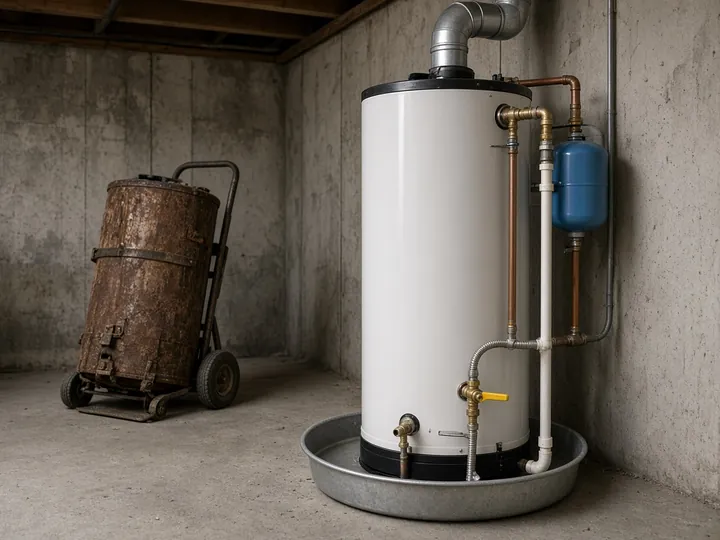
Drafts from the garage door can blow out pilots. Gasoline cans and lawn equipment near the heater can trip the vapor sensor. Keep them away, and protect the heater from vehicle impact.
Vent problems
After a furnace upgrade, the water heater may be alone in an oversized vent. Read our orphaned chimney guide.
After a flood
Gas controls exposed to floodwater should be replaced. Do not relight.
Safe relighting
Follow the label. If you smell gas, leave and call Nicor Gas from outside.
Local connection
Garages in neighborhoods near Lake Park and along the Des Plaines River Trail often hold the water heater, alongside bikes and kayaks.
Basements and lower levels
Not every Des Plaines heater is in a garage. Older homes near downtown often have basement heaters venting into masonry chimneys, and split-levels put heaters in lower-level utility rooms. Basement heaters face drafts from open windows and combustion air problems in finished rooms. A louvered door or ducted air supply keeps the flame healthy.
Reading the flame
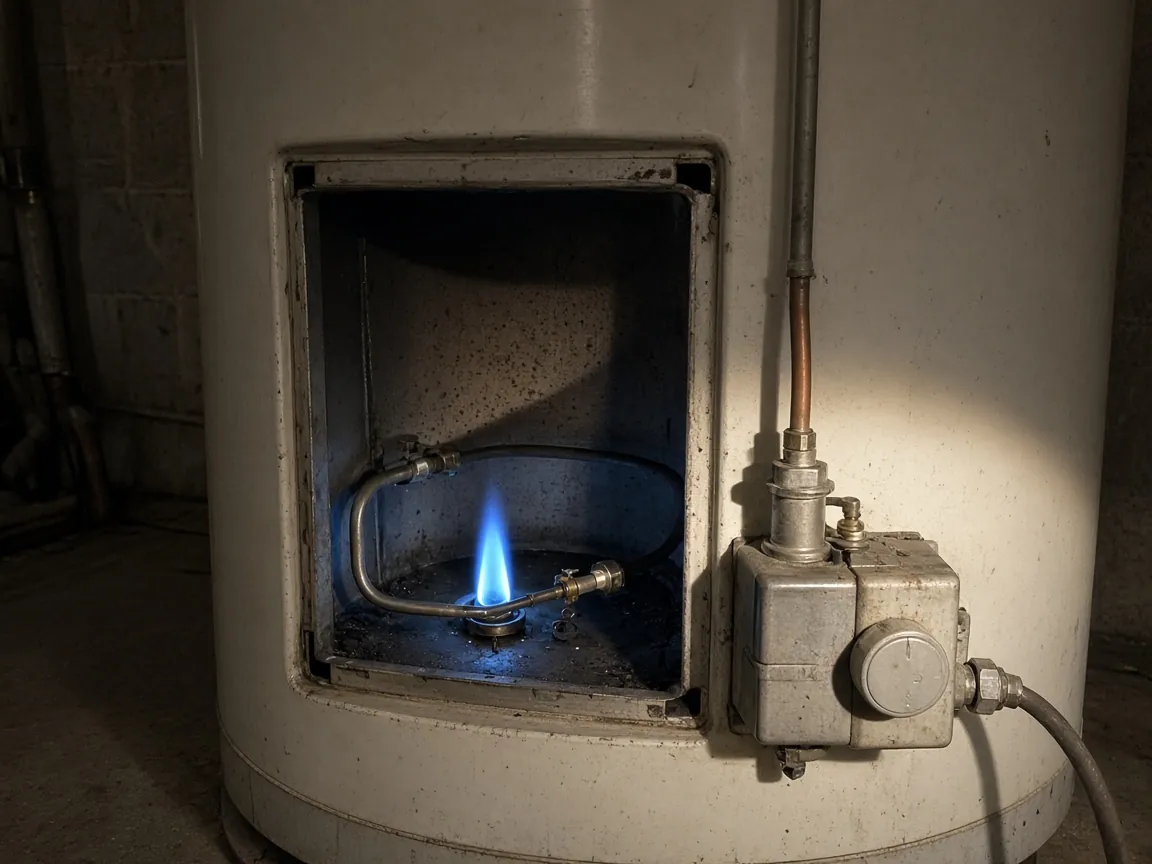
A healthy flame is mostly blue with small yellow tips. A lazy yellow flame, soot, or a roaring flame that lifts off the burner all mean service is needed. Do not run a heater with a sooty burner; it can produce carbon monoxide.
Thermocouple versus thermopile
Many newer gas heaters use a thermopile and electronic control rather than a simple thermocouple. These controls flash status lights to signal faults. Count the flashes and check the label or manual before calling.
Annual check
Once a year, look at the flame, test the relief valve, check the vent connection, and flush sediment. It takes little time and catches problems early.
Carbon monoxide
Keep working alarms near the heater and on sleeping floors, and test them monthly.
Repair or replace
A thermocouple, pilot assembly, or vapor sensor fix on a tank under ten years old is almost always worth doing. A failed gas control on a tank past twelve years usually is not; the control is costly and the tank behind it is near the end of its life. Floodwater damage to the control is a separate case: the control must be replaced regardless of the tank's age, and if the burner area rusted, replacing the whole heater may be simpler and safer.
Living with a water heater in Des Plaines
Des Plaines sits along the Des Plaines River northwest of Chicago, just north of O'Hare, and it receives Lake Michigan water through the regional system. The river shapes the city: some neighborhoods near it have dealt with serious flooding in past decades, and many homes have sump pumps, overhead sewers, or raised mechanical equipment as a result. Housing is mostly postwar, including brick and frame ranches, raised ranches, split-levels, and Cape Cods, plus older homes near downtown and Metropolitan Square, and townhomes and condos near the Cumberland and downtown Metra stations. Water heaters live in basements, lower levels of raised ranches, and garage corners. Where homes have finished lower levels, a tank leak or a flooded burner compartment is a bigger deal. Downtown Des Plaines, Cumberland, the Golf Road and Oakton Street corridors, and the riverside neighborhoods each have a different mix of building age and mechanical layout.
What a gas diagnosis in Des Plaines should cover
- Gas valve position and supply to other appliances confirmed
- Pilot, thermocouple, thermopile, or hot-surface igniter tested
- Status light flash code read against the manufacturer chart
- Vent connector slope, joints, and chimney draft checked with the burner running
- Combustion air openings compared with the room and appliance load
- Burner, orifice, and flame arrestor screen inspected for lint and scale
- Flammable vapor sensor and thermal cutoff checked, never bypassed
- Carbon monoxide alarms confirmed on every level
Gas repair call prep for Des Plaines
Before a gas repair call in Des Plaines, note the brand and model, whether the heater has a standing pilot or electronic ignition, and any blinking pattern on the gas control. Mention whether the trouble lines up with wind, a cold snap, or a new furnace or range. Make sure there is a working carbon monoxide alarm near the sleeping areas.
Des Plaines gas water heater repair at a glance
- Where: gas water heater repair for homes in Des Plaines, Illinois, about 30–40 minutes northwest of the Loop.
- Des Plaines places this gas water heater repair page mentions: Lake Park and Lake Opeka and Des Plaines River Trail.
- Des Plaines permits for gas water heater repair: ask the City of Des Plaines building department.
- Illinois code behind gas water heater repair: IDPH plumbing program.
- Des Plaines utilities for gas water heater repair: Nicor Gas gas and ComEd power at most addresses.
- Next town over for gas water heater repair: Gas water heater repair in Park Ridge.
Related
For general diagnosis, see water heater repair in Des Plaines. If the heater is beyond repair, read water heater replacement in Des Plaines. For gas odor or leaks, go to emergency water heater repair in Des Plaines. The metro page is gas water heater repair in Chicago, and gas water heater repair in Park Ridge covers the city east.